





Multi-omics Mendelian randomization study on the causality between non-ionizing radiation and facial aging
-
摘要:
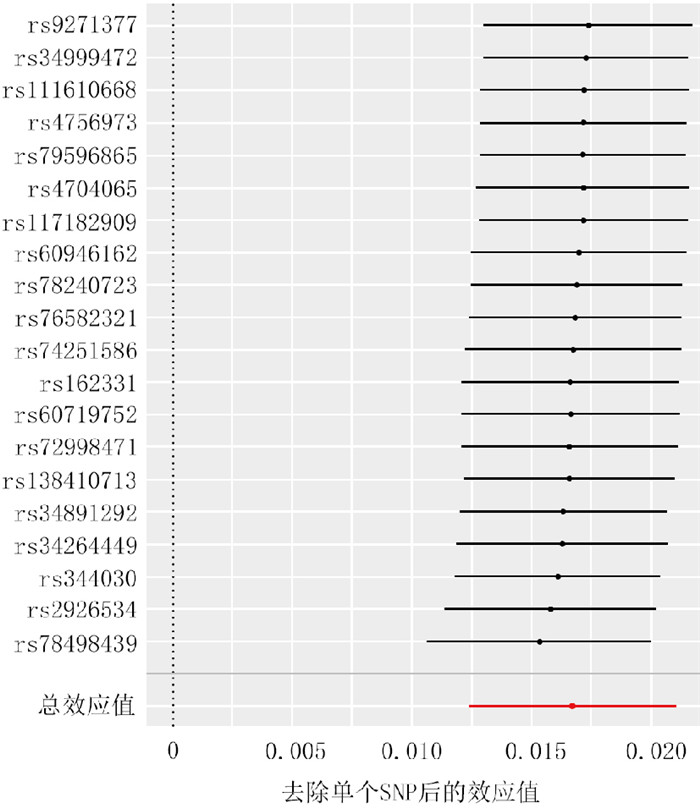
目的 探讨非电离辐射与面部衰老的因果关系,挖掘与面部衰老潜在相关的基因。 方法 该研究为基于多种孟德尔随机化(MR)分析方法的研究。获取非电离辐射(FinnGen数据库,样本数218 281)和面部衰老(UK Biobank数据库,样本数423 999)的全基因组关联分析数据,以单核苷酸多态性(SNP)为工具变量,设置显著阈值(P < 5×10⁻⁶)并进一步采用连锁不平衡分析等筛选非电离辐射相关SNP。采用双样本MR(TSMR)分析非电离辐射与面部衰老的因果关系,以逆方差加权(IVW)法作为主要分析方法,并辅以MR-Egger回归、加权中位数法、加权模式法和简单模式法进行验证。针对筛选出的非电离辐射相关SNP,进行Cochran Q检验评估异质性,进行MR-Egger截距检验、MR-PRESSO检验评估水平多效性,进行留一法分析评估可靠性。采用多变量MR(MVMR)分析校正吸烟频率、血液酒精浓度、运动频率、体重指数、收缩压和舒张压等影响面部衰老的混杂因素。对基于非电离辐射相关基因的表达数量性状位点(eQTL)数据进行基于汇总数据的MR(SMR)分析,筛选面部衰老潜在相关基因,并进一步采用TSMR分析进行验证。应用蛋白质数量性状位点(pQTL)数据和甲基化数量性状位点(mQTL)数据进行TSMR分析,从多组学角度探讨MED1基因与面部衰老的因果关系。通过共定位分析(后验概率H4 > 50%)验证MED1基因与面部衰老的遗传关联。 结果 筛选出20个达到显著阈值的非电离辐射相关SNP,其F值均 > 10。IVW法分析显示非电离辐射与面部衰老存在正向因果关系(比值比为1.02,95%置信区间为1.01~1.02,P < 0.05),MR-Egger回归、加权中位数法、简单模式法和加权模式法等的分析结果(比值比分别为1.02、1.02、1.01、1.01,95%置信区间分别为1.01~1.03、1.01~1.02、0.99~1.02、1.00~1.02,P < 0.05)均与IVW法一致。针对20个非电离辐射相关SNP,IVW法和MR-Egger回归的Cochran Q检验均显示不存在显著异质性(Q值分别为23.20、22.59,P > 0.05),MR-Egger截距检验(截距的绝对值为0.01,标准误为0.01,P > 0.05)和MR-PRESSO检验(P > 0.05)均显示无水平多效性。留一法分析进一步证实无单个SNP对结果产生显著影响。MVMR分析显示,收缩压、舒张压、吸烟频率、血液酒精浓度、体重指数以及运动频率等混杂因素被校正之后,非电离辐射仍是面部衰老的危险因素(比值比分别为1.01、1.01、1.02、1.02、1.01、1.04,95%置信区间分别为1.01~1.02、1.01~1.02、1.01~1.02、1.01~1.02、1.00~1.01、1.03~1.05,P值均 < 0.05)。SMR分析显示,SENP7、CCND1、LTBP2、IKZF3、MED1、ORMDL3、ZBTB7B、LOX、NEBL、EXOSC6、PSMA4、EIF2B2等12个基因为面部衰老潜在相关基因(比值比分别为1.01、1.03、1.04、0.99、1.04、1.01、1.06、0.88、1.01、0.99、1.04、0.99,P值均 < 0.05)。进一步的TSMR分析显示,ZBTB7B、SENP7、NEBL、MED1、PSMA4、ORMDL3等6个基因为面部衰老的危险因素(比值比分别为1.04、1.01、1.00、1.02、1.03、1.01,95%置信区间分别为1.02~1.05、1.00~1.01、1.00~1.01、1.01~1.03、1.01~1.04、1.00~1.01,P值均 < 0.05),LOX、EIF2B2、EXOSC6、IKZF3等4个基因为面部衰老的保护因素(比值比分别为0.92、0.99、0.99、0.99,95%置信区间分别为0.90~0.94、0.99~0.99、0.99~1.00、0.99~1.00,P值均 < 0.05)。基于pQTL数据的TSMR分析表明,MED1蛋白是面部衰老的促进因素(比值比为1.04,P < 0.05),该结果与eQTL数据的SMR及TSMR分析中观察到的因果效应方向保持一致。基于mQTL数据的TSMR分析表明,MED1基因的甲基化修饰(探针分别为cg15445000与cg03013999)是面部衰老的保护因素(比值比分别为0.99、0.99,P值均 < 0.05)。共定位分析显示后验概率H4=58.4%,提示MED1基因与面部衰老可能共享相同的因果遗传变异位点。 结论 通过多组学MR分析,明确非电离辐射与面部衰老之间存在因果关系,且该因果关系在校正吸烟频率、血液酒精浓度、运动频率等混杂因素后仍保持高度显著性;明确SENP7、NEBL、EIF2B2、PSMA4、EXOSC6、IKZF3、ORMDL3、ZBTB7B、LOX、MED1等10个基因,尤其是MED1基因可能参与面部衰老过程。 Abstract:Objective To investigate the causality between non-ionizing radiation and facial aging, and to identify potential genes associated with facial aging. Methods This study employed a method of analysis based on multiple Mendelian randomization (MR). Genome-wide association study data of non-ionizing radiation (FinnGen database, n=218 281) and facial aging (UK Biobank database, n=423 999) were retrieved. Single nucleotide polymorphisms (SNPs) were used as instrumental variables, with a significance threshold (P < 5×10⁻⁶) applied and further linkage disequilibrium analysis performed to select SNPs associated with non-ionizing radiation. Two-sample MR (TSMR) analysis was conducted to assess the causality between non-ionizing radiation and facial aging, using inverse variance weighting (IVW) method as the primary analytical method and supplementing with MR-Egger regression, weighted median, weighted mode, and simple mode methods for validation. For the selected non-ionizing radiation-associated SNPs, heterogeneity was tested by Cochran Q test, horizontal pleiotropy was assessed by the MR-Egger intercept test and MR-PRESSO test, and robustness was evaluated via leave-one-out analysis. Multivariable MR (MVMR) analysis was performed to adjust for confounding factors affecting facial aging including smoking frequency, blood alcohol concentration, exercise frequency, body mass index, and systolic and diastolic blood pressure. Summary-data-based MR (SMR) analysis using expression quantitative trait loci (eQTL) data was conducted to screen candidate genes of facial aging, which were then validated by TSMR analysis. Protein quantitative trait loci (pQTL) and methylation quantitative trait loci (mQTL) data were analyzed by TSMR analysis to examine the causal role of MED1 gene with facial aging from multi-omics aspect. The genetic association of MED1 gene with facial aging was verified by colocalization analysis (posterior probability H4 > 50%). Results Twenty non-ionizing radiation-related SNPs that reached the significance threshold were screened out, with F values being all > 10. IVW analysis demonstrated a positive causality between non-ionizing radiation and facial aging (with odds ratio of 1.02, with 95% confidence interval of 1.01-1.02, P < 0.05). The analysis results of MR-Egger regression, weighted median, simple mode method, and weighted mode method (with odds ratios of 1.02, 1.02, 1.01, and 1.01, respectively, with 95% confidence intervals of 1.01-1.03, 1.01-1.02, 0.99-1.02, respectively, P < 0.05) were consistent with IVW method. For these 20 non-ionizing radiation-related SNPs, Cochran Q test under IVW method and MR-Egger showed no significant heterogeneity (with Q values of 23.20 and 22.59, respectively, P > 0.05); the MR-Egger intercept test (with intercept absolute value of 0.01, with standard error of 0.01, P > 0.05) and MR-PRESSO test (P > 0.05) indicated no horizontal pleiotropy. Leave-one-out analysis further confirmed that no individual SNP had a significant effect on the results. After correction of confounding factors such as systolic blood pressure, diastolic blood pressure, smoking frequency, blood alcohol concentration, body mass index, and exercise frequency, MVMR analysis showed that non-ionizing radiation remained a risk factor for facial aging (with odds ratios of 1.01, 1.01, 1.02, 1.02, 1.01, and 1.04, respectively, with 95% confidence intervals of 1.01-1.02, 1.01-1.02, 1.01-1.02, 1.01-1.02, 1.00-1.01, and 1.03-1.05, respectively, all P values < 0.05). SMR analysis identified 12 potential facial aging-related genes (SENP7, CCND1, LTBP2, IKZF3, MED1, ORMDL3, ZBTB7B, LOX, NEBL, EXOSC6, PSMA4, and EIF2B2, with odds ratios of 1.01, 1.03, 1.04, 0.99, 1.04, 1.01, 1.06, 0.88, 1.01, 0.99, 1.04, and 0.99, respectively, all P values < 0.05). Subsequent TSMR analysis retained 6 risk genes (ZBTB7B, SENP7, NEBL, MED1, PSMA4, and ORMDL3, with odds ratios of 1.04, 1.01, 1.00, 1.02, 1.03, and 1.01, respectively, with 95% confidence intervals of 1.02-1.05, 1.00-1.01, 1.00-1.01, 1.01-1.03, 1.01-1.04, and 1.00-1.01, respectively, all P values < 0.05) for facial aging and 4 protective genes (LOX, EIF2B2, EXOSC6, and IKZF3, with odds ratios of 0.92, 0.99, 0.99, and 0.99, respectively, with 95% confidence intervals of 0.90-0.94, 0.99-0.99, 0.99-1.00, and 0.99-1.00, respectively, all P values < 0.05). TSMR analysis based on pQTL data showed the MED1 protein was positively associated with facial aging (with odds ratio of 1.04, P < 0.05), which was consistent with the causal direction observed in eQTL-based SMR and TSMR analyses. TSMR analysis based on mQTL data indicated MED1 gene methylation (with probes of cg15445000 and cg03013999) had a protective effect on facial aging (with odds ratios of 0.99 and 0.99, respectively, both P values < 0.05). Colocalization analysis yielded a posterior probability H4=58.4%, suggesting that MED1 gene and facial aging likely shared the same causal genetic variant. Conclusions Through multi-omics MR analyses, it has confirmed that there is a causality between non-ionizing radiation and facial aging, which remained highly significant after correcting for potential confounders such as smoking frequency, blood alcohol concentration, exercise frequency, and the others. Clearly, 10 genes including SENP7, NEBL, EIF2B2, PSMA4, EXOSC6, IKZF3, ORMDL3, ZBTB7B, LOX, and MED1, particularly the MED1, may be involved in the process of facial aging. -
Key words:
- Radiation, nonionizing /
- Mendelian randomization analysis /
- Databases, Genetic /
- Causality /
- Facial aging /
- Gene target
本文亮点(1) 研究结果基于公开的大规模全基因组关联分析数据,具有样本量大、受到混杂因素影响小的优势,这相较于传统观察性研究可能具有更强的说服力。(2) 通过多组学孟德尔随机化分析,明确非电离辐射与面部衰老之间存在因果关系,且该因果关系在校正吸烟频率、血液酒精浓度、运动频率、体重指数、收缩压和舒张压等混杂因素后仍保持高度显著性;明确SENP7、NEBL、EIF2B2、PSMA4、EXOSC6、IKZF3、ORMDL3、ZBTB7B、LOX、MED1等10个基因可能参与面部衰老过程,其中MED1基因可能是面部衰老的评估与治疗的潜在药物靶点。 -
参考文献
(45) [1] Swift A, Liew S, Weinkle S, et al. The facial aging process from the "inside out"[J]. Aesthet Surg J, 2021, 41(10): 1107-1119. DOI: 10.1093/asj/sjaa339. [2] Franco AC, Aveleira C, Cavadas C. Skin senescence: mechanisms and impact on whole-body aging[J]. Trends Mol Med, 2022, 28(2): 97-109. DOI: 10.1016/j.molmed.2021.12.003. [3] Tuieng RJ, Cartmell SH, Kirwan CC, et al. The effects of ionising and non-ionising electromagnetic radiation on extracellular matrix proteins[J]. Cells, 2021, 10(11): 3041. DOI: 10.3390/cells10113041. [4] Pittayapruek P, Meephansan J, Prapapan O, et al. Role of matrix metalloproteinases in photoaging and photocarcinogenesis[J]. Int J Mol Sci, 2016, 17(6): 868. DOI: 10.3390/ijms17060868. [5] Bang E, Kim DH, Chung HY. Protease-activated receptor 2 induces ROS-mediated inflammation through Akt-mediated NF-κB and FoxO6 modulation during skin photoaging[J]. Redox Biol, 2021, 44: 102022. DOI: 10.1016/j.redox.2021.102022. [6] Birney E. Mendelian randomization[J]. Cold Spring Harb Perspect Med, 2022, 12(4): a041302. DOI: 10.1101/cshperspect.a041302. [7] 易美慧, 郭晔. 儿童核心结合因子相关急性髓细胞白血病的细胞分子遗传学异常与预后[J]. 国际输血及血液学杂志, 2019, 42(2): 52-57. DOI: 10.3760/cma.j.issn.1673-419X.2019.02.013. [8] 于秋霜, 李凌勋, 陶怡娜, 等. 免疫细胞与脓毒症的因果关联: 一项基于孟德尔随机化方法的研究[J]. 中华危重病急救医学, 2024, 36(8): 821-828. DOI: 10.3760/cma.j.cn121430-20240527-00462. [9] Bourassa KJ, Moffitt TE, Ambler A, et al. Association of treatable health conditions during adolescence with accelerated aging at midlife[J]. JAMA Pediatr, 2022, 176(4): 392-399. DOI: 10.1001/jamapediatrics.2021.6417. [10] Kadunce DP, Burr R, Gress R, et al. Cigarette smoking: risk factor for premature facial wrinkling[J]. Ann Intern Med, 1991, 114(10): 840-844. DOI: 10.7326/0003-4819-114-10-840. [11] Rungratanawanich W, Qu Y, Wang X, et al. Advanced glycation end products (AGEs) and other adducts in aging-related diseases and alcohol-mediated tissue injury [J]. Exp Mol Med, 2021, 53(2): 168-188. DOI: 10.1038/s12276-021-00561-7. [12] Bencivenga L, De Souto Barreto P, Rolland Y, et al. Blood pressure variability: a potential marker of aging[J]. Ageing Res Rev, 2022, 80: 101677. DOI: 10.1016/j.arr.2022.101677. [13] Lacolley P, Regnault V, Segers P, et al. Vascular smooth muscle cells and arterial stiffening: relevance in development, aging, and disease[J]. Physiol Rev, 2017, 97(4): 1555-1617. DOI: 10.1152/physrev.00003.2017. [14] Sanderson E. Multivariable Mendelian randomization and mediation[J]. Cold Spring Harb Perspect Med, 2021, 11(2): a038984. DOI: 10.1101/cshperspect.a038984. [15] Zhou W, Liu G, Hung RJ, et al. Causal relationships between body mass index, smoking and lung cancer: univariable and multivariable Mendelian randomization[J]. Int J Cancer, 2021, 148(5): 1077-1086. DOI: 10.1002/ijc.33292. [16] Xu S, Li X, Zhang S, et al. Oxidative stress gene expression, DNA methylation, and gut microbiota interaction trigger Crohn's disease: a multi-omics Mendelian randomization study[J]. BMC Med, 2023, 21(1): 179. DOI: 10.1186/s12916-023-02878-8. [17] Yang H, Liu D, Zhao C, et al. Mendelian randomization integrating GWAS and eQTL data revealed genes pleiotropically associated with major depressive disorder [J]. Transl Psychiatry, 2021, 11(1): 225. DOI: 10.1038/s41398-021-01348-0. [18] Su WM, Gu XJ, Dou M, et al. Systematic druggable genome-wide Mendelian randomisation identifies therapeutic targets for Alzheimer's disease[J]. J Neurol Neurosurg Psychiatry, 2023, 94(11): 954-961. DOI: 10.1136/jnnp-2023-331142. [19] Ferkingstad E, Sulem P, Atlason BA, et al. Large-scale integration of the plasma proteome with genetics and disease[J]. Nat Genet, 2021, 53(12): 1712-1721. DOI: 10.1038/s41588-021-00978-w. [20] McRae AF, Marioni RE, Shah S, et al. Identification of 55, 000 replicated DNA methylation QTL[J]. Sci Rep, 2018, 8(1): 17605. DOI: 10.1038/s41598-018-35871-w. [21] Wu Y, Zeng J, Zhang F, et al. Integrative analysis of omics summary data reveals putative mechanisms underlying complex traits[J]. Nat Commun, 2018, 9(1): 918. DOI: 10.1038/s41467-018-03371-0. [22] Sreedhar A, Aguilera-Aguirre L, Singh KK. Mitochondria in skin health, aging, and disease[J]. Cell Death Dis, 2020, 11(6): 444. DOI: 10.1038/s41419-020-2649-z. [23] López-Otín C, Blasco MA, Partridge L, et al. Hallmarks of aging: an expanding universe[J]. Cell, 2023, 186(2): 243-278. DOI: 10.1016/j.cell.2022.11.001. [24] Clarke TL, Mostoslavsky R. DNA repair as a shared hallmark in cancer and ageing[J]. Mol Oncol, 2022, 16(18): 3352-3379. DOI: 10.1002/1878-0261.13285. [25] Aging Biomarker Consortium, Bao H, Cao J, et al. Biomarkers of aging[J]. Sci China Life Sci, 2023, 66(5): 893-1066. DOI: 10.1007/s11427-023-2305-0. [26] Zimmermann A, Madreiter-Sokolowski C, Stryeck S, et al. Targeting the mitochondria-proteostasis axis to delay aging [J]. Front Cell Dev Biol, 2021, 9: 656201. DOI: 10.3389/fcell.2021.656201. [27] Wilson N, Kataura T, Korsgen ME, et al. The autophagy-NAD axis in longevity and disease[J]. Trends Cell Biol, 2023, 33(9): 788-802. DOI: 10.1016/j.tcb.2023.02.004. [28] Tokarz J, Möller G, Artati A, et al. Common muscle metabolic signatures highlight arginine and lysine metabolism as potential therapeutic targets to combat unhealthy aging[J]. Int J Mol Sci, 2021, 22 (15): 7958. DOI: 10.3390/ijms22157958. [29] Weng Z, Wang Y, Ouchi T, et al. Mesenchymal stem/stromal cell senescence: hallmarks, mechanisms, and combating strategies[J]. Stem Cells Transl Med, 2022, 11(4): 356-371. DOI: 10.1093/stcltm/szac004. [30] Zheng L, He S, Wang H, et al. Targeting cellular senescence in aging and age-related diseases: challenges, considerations, and the emerging role of senolytic and senomorphic therapies[J]. Aging Dis, 2024, 15(6): 2554-2594. DOI: 10.14336/AD.2024.0206. [31] Lv H, Gao N, Zhou Q, et al. Collagen-based dissolving microneedles with flexible pedestals: a transdermal delivery system for both anti-aging and skin diseases[J]. Adv Healthc Mater, 2023, 12(21): e2203295. DOI: 10.1002/adhm.202203295. [32] Tran DK, Phuong T, Bui NL, et al. Exploring the potential of stem cell-based therapy for aesthetic and plastic surgery [J]. IEEE Rev Biomed Eng, 2023, 16: 386-402. DOI: 10.1109/RBME.2021.3134994. [33] Montoni A, George KM, Soeur J, et al. Chronic UVA1 irradiation of human dermal fibroblasts: persistence of DNA damage and validation of a cell cultured-based model of photoaging[J]. J Invest Dermatol, 2019, 139(8): 1821-1824.e3. DOI: 10.1016/j.jid.2019.02.022. [34] Cenizo V, André V, Reymermier C, et al. LOXL as a target to increase the elastin content in adult skin: a dill extract induces the LOXL gene expression[J]. Exp Dermatol, 2006, 15(8): 574-581. DOI: 10.1111/j.1600-0625.2006.00442.x. [35] Majora M, Wittkampf T, Schuermann B, et al. Functional consequences of mitochondrial DNA deletions in human skin fibroblasts: increased contractile strength in collagen lattices is due to oxidative stress-induced lysyl oxidase activity[J]. Am J Pathol, 2009, 175(3): 1019-1029. DOI: 10.2353/ajpath.2009.080832. [36] Weihermann AC, de Carvalho CM, Schuck DC, et al. Modulation of photoaging-induced cutaneous elastin: evaluation of gene and protein expression of markers related to elastogenesis under different photoexposure conditions[J]. Dermatol Ther (Heidelb), 2021, 11(6): 2043-2056. DOI: 10.1007/s13555-021-00603-y. [37] Renard E, Chadjichristos C, Kypriotou M, et al. Chondroitin sulphate decreases collagen synthesis in normal and scleroderma fibroblasts through a Smad-independent TGF-beta pathway--implication of C-Krox and Sp1[J]. J Cell Mol Med, 2008, 12(6B): 2836-2847. DOI: 10.1111/j.1582-4934.2008.00287.x. [38] Li C, Stoma S, Lotta LA, et al. Genome-wide association analysis in humans links nucleotide metabolism to leukocyte telomere length[J]. Am J Hum Genet, 2020, 106(3): 389-404. DOI: 10.1016/j.ajhg.2020.02.006. [39] Villicaña S, Castillo-Fernandez J, Hannon E, et al. Genetic impacts on DNA methylation help elucidate regulatory genomic processes[J]. Genome Biol, 2023, 24(1): 176. DOI: 10.1186/s13059-023-03011-x. [40] Zhu H, Ren S, Bitler BG, et al. SPOP E3 ubiquitin ligase adaptor promotes cellular senescence by degrading the SENP7 deSUMOylase[J]. Cell Rep, 2015, 13(6): 1183-1193. DOI: 10.1016/j.celrep.2015.09.083. [41] Wang H, Guan T, Hu R, et al. Targeting KAT7 inhibits the progression of colorectal cancer[J]. Theranostics, 2025, 15(4): 1478-1495. DOI: 10.7150/thno.106085. [42] He L, Khanal P, Morse CI, et al. Differentially methylated gene patterns between age-matched sarcopenic and non-sarcopenic women[J]. J Cachexia Sarcopenia Muscle, 2019, 10(6): 1295-1306. DOI: 10.1002/jcsm.12478. [43] Li J, Hu S, Zhang Z, et al. LASP2 is downregulated in human liver cancer and contributes to hepatoblastoma cell malignant phenotypes through MAPK/ERK pathway[J]. Biomed Pharmacother, 2020, 127: 110154. DOI: 10.1016/j.biopha.2020.110154. [44] Yomogida K, Trsan T, Sudan R, et al. The transcription factor Aiolos restrains the activation of intestinal intraepithelial lymphocytes[J]. Nat Immunol, 2024, 25(1): 77-87. DOI: 10.1038/s41590-023-01693-w. [45] Mariani JN, Mansky B, Madsen PM, et al. Repression of developmental transcription factor networks triggers aging-associated gene expression in human glial progenitor cells[J]. Nat Commun, 2024, 15(1): 3873. DOI: 10.1038/s41467-024-48118-2. -

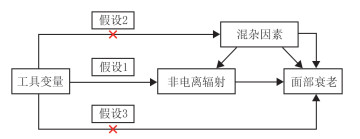
图 1 非电离辐射与面部衰老的双样本孟德尔随机化分析假设图
注:图中“×”指违反假设2(独立性假设)和假设3(排他性假设);假设1指关联性假设
Figure 1. Hypothesis diagram of two-sample Mendelian randomization analysis of non-ionizing radiation and facial aging

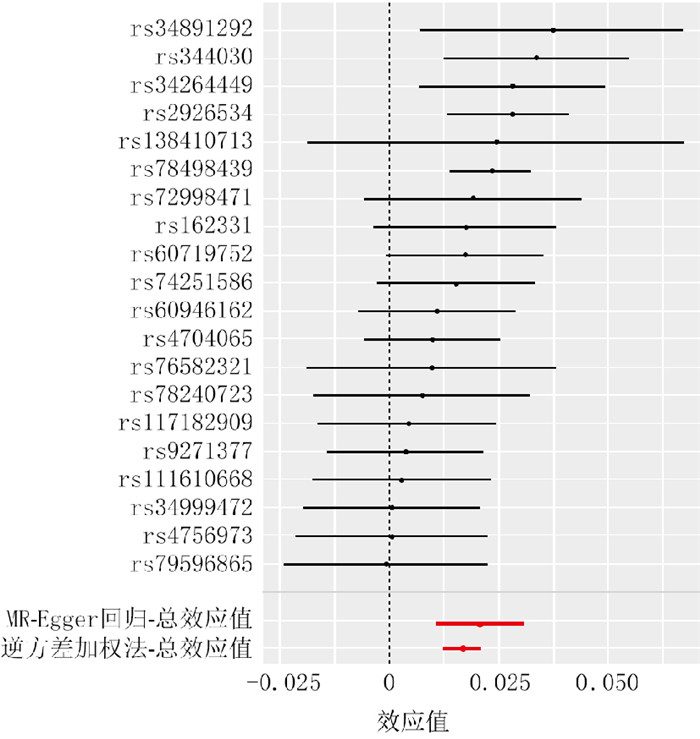
图 2 采用逆方差加权法和MR-Egger回归分析20个非电离辐射相关SNP与面部衰老因果关系的森林图
注:MR为孟德尔随机化,SNP为单核苷酸多态性;每条线段为误差线,线段中的圆点为比值比,该值> 0为危险因素、 < 0为保护因素,图中的灰色线段为分割线
Figure 2. Forest plot of the causality between 20 non-ionizing radiation-related SNPs and facial aging assessed by using inverse variance weighting method and MR-Egger regression analyses

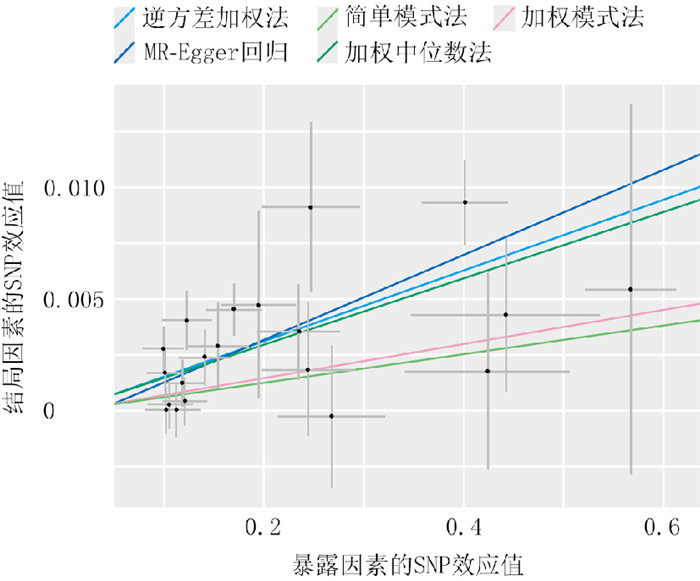
图 3 采用双样本MR分析20个非电离辐射相关SNP与面部衰老之间因果关系的散布图
注:MR为孟德尔随机化,SNP为单核苷酸多态性;直线的斜率表示每种方法的因果关联,斜率为正值表明非电离辐射可提高面部衰老发生风险
Figure 3. Scatter plot of the causality between 20 non-ionizing radiation-related SNPs and facial aging by two-sample MR analysis
-

 下载:
下载:

计量
- 文章访问数: 960
- HTML全文浏览量: 495
- PDF下载量: 9
- 被引次数: 0
