
- Medline/PubMed数据库
- Scopus数据库
- PMC数据库
- CSCD
- 北大核心收录期刊
- 统计源期刊
- 我国高质量科技期刊T1级
- 第6届中国精品科技期刊
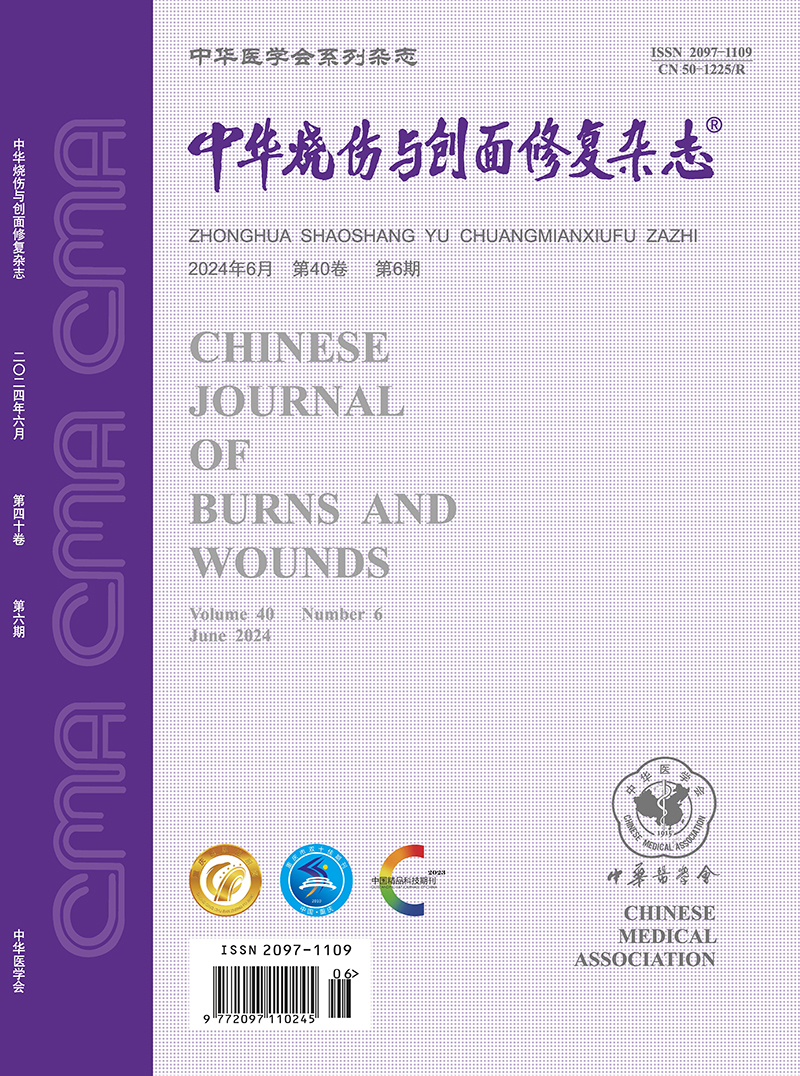
| Citation: | Lu Bo,Ma Xiaohong,Fu Qingqing,et al.Effect of the hand function assessment and training system on hand function rehabilitation in patients with burns[J].Chin J Burns Wounds,2026,42(11):1-9.DOI: 10.3760/cma.j.cn501225-20250715-00306.

|

| [1] |
KaraS, SeyhanN, ÖksüzS. Effectiveness of early rehabilitation in hand burns[J]. Ulus Travma Acil Cerrahi Derg, 2023,29(6):691-697. DOI: 10.14744/tjtes.2023.22780.
|
| [2] |
赵海洋, 韩军涛, 刘佳琦, 等. 手持续被动运动系统联合功能训练与压力手套治疗手背部烧伤后早期瘢痕挛缩的效果[J].中华烧伤杂志,2021,37(4):319-326. DOI: 10.3760/cma.j.cn501120-20201020-00443.
|
| [3] |
许静,蔡志雨,徐振雷.Maslow理论指导下护理干预对手部烧伤后瘢痕整形患者自护能力及术后康复的影响[J].中国美容医学,2024,33(5):168-171.
|
| [4] |
LiuM, ZhuH, YanR, et al. Epidemiology and outcome analysis of 470 patients with hand burns: a five-year retrospective study in a major burn center in southwest China[J]. Med Sci Monit, 2020,26:e918881. DOI: 10.12659/MSM.918881.
|
| [5] |
KnightA, WasiakJ, SalwayJ, et al. Factors predicting health status and recovery of hand function after hand burns in the second year after hospital discharge[J]. Burns, 2017,43(1):100-106. DOI: 10.1016/j.burns.2016.07.025.
|
| [6] |
严雪芹,曹松梅,周芳芳,等.手部烧伤患者手功能早期康复管理的最佳证据总结[J].中华护理杂志,2025,60(8):998-1004. DOI: 10.3761/j.issn.0254-1769.2025.08.017.
|
| [7] |
BashaMA, Abdel-AalNM, KamelF. Effects of Wii fit rehabilitation on lower extremity functional status in adults with severe burns: a randomized controlled trial[J]. Arch Phys Med Rehabil, 2022,103(2):289-296. DOI: 10.1016/j.apmr.2021.08.020.
|
| [8] |
李秀丽,李珊,冯梦晨,等.采用上肢运动游戏治疗卒中后轻度认知障碍并结合功能性近红外光谱技术进行疗效评估的研究[J].中国康复,2023,38(7):412-416.
|
| [9] |
刘美凤, 赵黎明, 孙红日, 等. 任务导向性训练对脑卒中偏瘫者骨骼肌含量及肌力的影响[J]. 重庆医科大学学报, 2017,42(10):1270-1273. DOI: 10.13406/j.cnki.cyxb.001013.
|
| [10] |
HeM, HuangL, TangD, et al. Intervention effect of lower limb rehabilitation robot with task-oriented training on stroke patients and its influence on KFAROM score[J]. J Biosci Med, 2024, 12(9): 62-72. DOI: 10.4236/jbm.2024.129007.
|
| [11] |
AlsubiheenAM, ChoiW, YuW, et al. The Effect of task-oriented activities training on upper-limb function, daily activities, and quality of life in chronic stroke patients: a randomized controlled trial[J]. Int J Environ Res Public Health, 2022,19(21):14125. DOI: 10.3390/ijerph192114125.
|
| [12] |
MalikAN, MasoodT. Task-oriented training and exer-gaming for improving mobility after stroke: a randomized trial[J]. J Pak Med Assoc, 2021,71(1(B)):186-190. DOI: 10.47391/JPMA.560.
|
| [13] |
蔡俊燕, 肖王静, 孙子荔, 等. 康复训练联合阶段式压力治疗对手部深度烧伤后瘢痕增生及运动功能的影响[J].中华物理医学与康复杂志,2025,47(6):524-529. DOI: 10.3760/cma.j.cn421666-20250224-00091.
|
| [14] |
史娜,金晓燕,赵凯平,等.基于家庭远程康复平台的延续性康复改善手烧伤患者抗瘢痕治疗的疗效[J].中国医科大学学报,2023,52(9):810-814. DOI: 10.12007/j.issn.0258-4646.2023.09.007.
|
| [15] |
ZhouYQ, ZhouJY, LuoGX, et al. Effects of early rehabilitation in improvement of paediatric burnt hands function[J]. World J Clin Cases, 2021,9(32):9741-9751. DOI: 10.12998/wjcc.v9.i32.9741.
|
| [16] |
黎宁, 付青青, 罗月, 等. 基于个案管理模式的康复护理决策方案在严重烧伤患者中的应用效果[J].中华烧伤与创面修复杂志,2024,40(1):78-86. DOI: 10.3760/cma.j.cn501225-20230905-00078.
|
| [17] |
谭江琳, 罗高兴. 重视烧伤康复评定[J].中华烧伤与创面修复杂志,2023,39(12):1109-1114. DOI: 10.3760/cma.j.cn501225-20230831-00070.
|
| [18] |
费才莲, 谢娟, 顾盈盈, 等. 多元化手功能锻炼在脑梗死手部功能障碍患者中的应用效果研究[J].重庆医科大学学报,2022,47(7):828-833. DOI: 10.13406/j.cnki.cyxb.003065.
|
| [19] |
朱婵, 何林, 何亭, 等. 手背皮肤软组织缺损伴伸肌腱损伤修复术后早期康复治疗的临床效果[J].中华烧伤与创面修复杂志,2024,40(4):365-372. DOI: 10.3760/cma.j.cn501225-20230820-00057.
|
| [20] |
朱婵,何林,张博文,等.儿童手烧伤后瘢痕挛缩家庭康复治疗模式的探索[J].中华烧伤与创面修复杂志,2023,39(1):45-52. DOI: 10.3760/cma.j.cn501225-20220622-00253.
|
| [21] |
KennedyDL, Chism-BalangueT, FurnissD. Reporting of scar outcomes in the hand and wrist; a state-of-the-art literature review[J]. BMC Musculoskelet Disord, 2023,24(1):249. DOI: 10.1186/s12891-023-06296-y.
|
| [22] |
倪少俊, 徐秋月. 不同年龄手部烧伤瘢痕挛缩畸形患者修复后功能恢复水平比较[J].中国美容医学,2021,30(4):89-91.
|
| [23] |
SamhanAF, AbdelhalimNM, ElnaggarRK. Effects of interactive robot-enhanced hand rehabilitation in treatment of paediatric hand-burns: a randomized, controlled trial with 3-months follow-up[J]. Burns, 2020,46(6):1347-1355. DOI: 10.1016/j.burns.2020.01.015.
|
| [24] |
YuJ, SongJ, ShenQ. Effects of fully immersive virtual reality training on cognitive function in patients with mild cognitive impairment: a systematic review and meta-analysis[J]. Front Hum Neurosci, 2024,18:1467697. DOI: 10.3389/fnhum.2024.1467697.
|
| [25] |
RahimkhaniM, MohammadabadiA, AskariM, et al. Investigating the impact of patient-centered peer counseling on anxiety and pain among burn patients: a randomized controlled trial[J]. Burns, 2024,50(8):2091-2102. DOI: 10.1016/j.burns.2024.07.034.
|
| [26] |
RehanM, TariqR, IqbalT, et al. Impact of burns on anxiety, depression and selfesteem among patients with burn injuries: a cross-sectional study[J]. Ann Burns Fire Disasters, 2024,37(2):134-139.
|
| [27] |
KhameesKM, DeldarK, YazarluO, et al. Effect of augmented reality-based rehabilitation of hand burns on hand function in children: A randomized controlled trial[J]. J Hand Ther, 2025,38(2):235-245. DOI: 10.1016/j.jht.2023.10.009.
|
| [28] |
BaY, LiF, WuY, et al. A clinical study on the evaluation of rehabilitation outcomes in patients with deep hand burns using hand strength monitoring[J]. Burns, 2025,51(4):107415. DOI: 10.1016/j.burns.2025.107415.
|
| [29] |
MagniNE, McNairPJ, RiceDA. Impairments in grip and pinch force accuracy and steadiness in people with osteoarthritis of the hand: a case-control comparison[J]. Musculoskelet Sci Pract, 2021,55:102432. DOI: 10.1016/j.msksp.2021.102432.
|
| [30] |
ChenB, JiaQ, HuangJ, et al. Clinical symptoms of postburn hypertrophic scars and analysis of risk factors for itching and pain requiring pharmacological intervention[J]. Dermatol Surg, 2025,51(4):396-402. DOI: 10.1097/DSS.0000000000004516.
|
| [31] |
SantuzziCH, Gonçalves LiberatoFM, Fachini de OliveiraNF, et al. Massage, laser and shockwave therapy improve pain and scar pruritus after burns: a systematic review[J]. J Physiother, 2024,70(1):8-15. DOI: 10.1016/j.jphys.2023.10.010.
|
| [32] |
安东, 刘阳, 杨通江. 体外冲击波疗法在烧伤创面修复和烧伤后瘢痕治疗中的应用[J].中国组织工程研究,2022,26(20):3265-3272.
|
| [33] |
金亚新, 廖雨萍, 刘韦辰, 等. 疼痛综合管理护理质量评价指标体系的构建[J].中国疼痛医学杂志,2024,30(8):630-634. DOI: 10.3969/j.issn.1006-9852.2024.08.012.
|
| [34] |
宋春红, 黎景波, 蓝蔚, 等. 压力治疗对大面积烧伤继发增生性瘢痕患者血流动力学的影响及其机制[J].中华烧伤与创面修复杂志,2022,38(12):1126-1132. DOI: 10.3760/cma.j.cn501225-20220616-00235.
|
| [35] |
DahmS, LeeG, ClelandH, et al. The use of carbon dioxide and intense pulsed light laser for the treatment of hypertrophic burn scars: A case series[J]. Scars Burn Heal, 2023,9:20595131231202103. DOI: 10.1177/20595131231202103.
|
| [36] |
BetarN, DonovanM, TyackZ, et al. Recovery in patients undergoing ablative fractional carbon dioxide laser for adult hypertrophic burn scars: a longitudinal cohort study[J]. Burns, 2025,51(1):107300. DOI: 10.1016/j.burns.2024.107300.
|
| [37] |
冯伟华, 何宛玥, 唐忠一, 等. 甲状腺术后瘢痕防治的研究进展[J].中华内分泌外科杂志,2023,17(4):504-507. DOI: 10.3760/cma.j.cn.115807-20221212-00369.
|
| [38] |
周青青,施加加,倪波业.扩展Barthel指数与功能独立性量表在评定脑卒中患者日常生活活动功能等级中的对比分析[J].中华物理医学与康复杂志,2021,43(7):602-606. DOI: 10.3760/cma.j.issn.0254-1424.2021.07.005.
|
| [39] |
ChruscielJ ,NdoyeR ,NdiongueM B , et al.Predictive value of a self-administered frailty screening questionnaire for the effectiveness of functional rehabilitation evaluated with the locomotor functional independence measure in a geriatric rehabilitation unit: a multicentre cohort study[J].BMC Geriatrics,2024,24(1):1013-1013.DOI: 10.1186/S12877-024-05605-X.
|
Figures(1) / Tables(5)
Copyright © Chinese Journal of Burns京ICP备07035254号-14
E-mail:shaoshangzazhi@163.com
Supported by:
Beijing Renhe Information Technology Co. Ltd


 DownLoad: