- Medline/PubMed数据库
- Scopus数据库
- PMC数据库
- CSCD
- 北大核心收录期刊
- 统计源期刊
- 我国高质量科技期刊T1级
- 第6届中国精品科技期刊
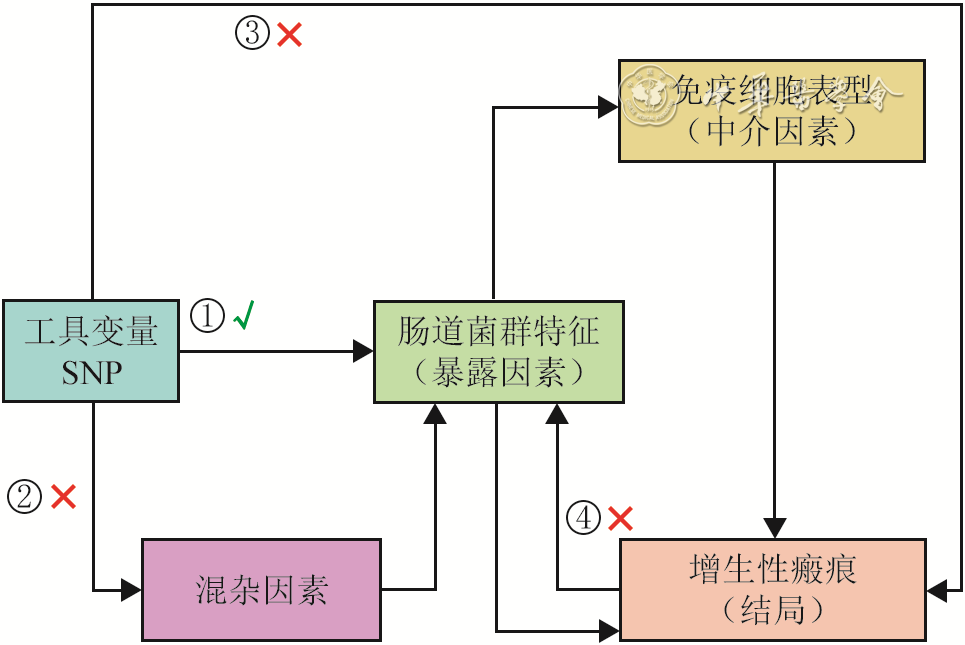
| Citation: | Lou JQ,Li JL,Cui SY,et al.Two-step two-sample mediation MR analysis of causal relationships between human gut microbiota features, immune cell phenotypes, and HS[J].Chin J Burns Wounds,2026,42(4):383-392.DOI: 10.3760/cma.j.cn501225-20241226-00509.

|

| [1] |
ShuchengH,LiJ,LiuYL,et al.Causal relationship between gut microbiota and pathological scars: a two-sample Mendelian randomization study[J].Front Med (Lausanne),2024,11:1405097.DOI: 10.3389/fmed.2024.1405097.
|
| [2] |
LiuH,LiJ,GuanC,et al.Endometriosis is a disease of immune dysfunction, which could be linked to microbiota[J].Front Genet,2024,15:1386411.DOI: 10.3389/fgene.2024.1386411.
|
| [3] |
ChengX,ChengB,JinR,et al.The role of circulating metabolites and gut microbiome in hypertrophic scar: a two-sample Mendelian randomization study[J].Arch Dermatol Res,2024,316(6):315.DOI: 10.1007/s00403-024-03116-8.
|
| [4] |
ClaytonSM,ShafikhaniSH,SoulikaAM.Macrophage and neutrophil dysfunction in diabetic wounds[J].Adv Wound Care (New Rochelle),2024,13(9):463-484.DOI: 10.1089/wound.2023.0149.
|
| [5] |
LivantsovaEN,LeonovGE,StarodubovaAV,et al.Diet and the gut microbiome as determinants modulating metabolic outcomes in young obese adults[J].Biomedicines,2024,12(7):1601.DOI: 10.3390/biomedicines12071601.
|
| [6] |
LiuX,LiuH,WuX,et al.Xiaoyaosan against depression through suppressing LPS mediated TLR4/NLRP3 signaling pathway in "microbiota-gut-brain" axis[J].J Ethnopharmacol,2024,335:118683.DOI: 10.1016/j.jep.2024.118683.
|
| [7] |
Réthi-NagyZ,JuhászS.Microbiome's universe: impact on health, disease and cancer treatment[J].J Biotechnol,2024,392:161-179.DOI: 10.1016/j.jbiotec.2024.07.002.
|
| [8] |
Herrera-LuisE,OrtegaVE,AmplefordEJ,et al.Multi-ancestry genome-wide association study of asthma exacerbations[J].Pediatr Allergy Immunol,2022,33(6):e13802.DOI: 10.1111/pai.13802.
|
| [9] |
GuoW,ZhaoL,HuangW,et al.Sodium-glucose cotransporter 2 inhibitors, inflammation, and heart failure: a two-sample Mendelian randomization study[J].Cardiovasc Diabetol,2024,23(1):118.DOI: 10.1186/s12933-024-02210-5.
|
| [10] |
Lopera-MayaEA,KurilshikovA,van der GraafA,et al.Effect of host genetics on the gut microbiome in 7,738 participants of the Dutch Microbiome Project[J].Nat Genet,2022,54(2):143-151.DOI: 10.1038/s41588-021-00992-y.
|
| [11] |
KurkiMI,KarjalainenJ,PaltaP,et al.FinnGen provides genetic insights from a well-phenotyped isolated population[J].Nature,2023,613(7944):508-518.DOI: 10.1038/s41586-022-05473-8.
|
| [12] |
OrrùV,SteriM,SidoreC,et al.Complex genetic signatures in immune cells underlie autoimmunity and inform therapy[J].Nat Genet,2020,52(10):1036-1045.DOI: 10.1038/s41588-020-0684-4.
|
| [13] |
LouJ,CuiS,LiJ,et al.Causal relationship between the gut microbiome and basal cell carcinoma, melanoma skin cancer, ease of skin tanning: evidence from three two-sample mendelian randomisation studies[J].Front Immunol,2024,15:1279680.DOI: 10.3389/fimmu.2024.1279680.
|
| [14] |
BurgessS,ThompsonSG, Genetics CollaborationCRP CHD. Methods for meta-analysis of individual participant data from Mendelian randomisation studies with binary outcomes[J].Stat Methods Med Res,2016,25(1):272-293.DOI: 10.1177/0962280212451882.
|
| [15] |
BurgessS,WoolfB,MasonAM,et al.Addressing the credibility crisis in Mendelian randomization[J].BMC Med,2024,22(1):374.DOI: 10.1186/s12916-024-03607-5.
|
| [16] |
WoolfB,GillD,GrantAJ,et al.MVMRmode: introducing an R package for plurality valid estimators for multivariable Mendelian randomisation[J].PLoS One,2024,19(5):e0291183.DOI: 10.1371/journal.pone.0291183.
|
| [17] |
YuanS,LarssonSC,GillD,et al.Concerns about instrumental variable selection for biological effect versus uptake of proton pump inhibitors in Mendelian randomisation analysis[J].Gut,2024,74(1):e6.DOI: 10.1136/gutjnl-2024-332280.
|
| [18] |
ShenHT,FangYT,TsaiWH,et al.A Lactobacillus combination ameliorates lung inflammation in an elastase/LPS-induced mouse model of chronic obstructive pulmonary disease[J].Probiotics Antimicrob Proteins,2025,17(5):3416-3428.DOI: 10.1007/s12602-024-10300-9.
|
| [19] |
JungY,ParkC,LeeH,et al.Association of the skin microbiome with the biomechanical scar properties in patients with burns[J].Burns,2025,51(3):107372.DOI: 10.1016/j.burns.2025.107372.
|
| [20] |
陈文涛,王小祥,郑文炼,等.基于双样本孟德尔随机化分析探索人肠道菌群与增生性瘢痕之间的因果关系[J].中华烧伤与创面修复杂志,2024,40(4):333-341.DOI: 10.3760/cma.j.cn501225-20231129-00215.
|
| [21] |
CadyN,PetersonSR,FreedmanSN,et al.Beyond metabolism: the complex interplay between dietary phytoestrogens, gut bacteria, and cells of nervous and immune systems[J].Front Neurol,2020,11:150.DOI: 10.3389/fneur.2020.00150.
|
| [22] |
ZengY,FanN,GuX,et al.Characteristics of gut microbiota and serum metabolism in patients with atopic dermatitis[J].Skin Res Technol,2024,30(7):e13792.DOI: 10.1111/srt.13792.
|
| [23] |
YangL,LiD,SunS,et al.Dupilumab therapy improves gut microbiome dysbiosis and tryptophan metabolism in Chinese patients with atopic dermatitis[J].Int Immunopharmacol,2024,131:111867.DOI: 10.1016/j.intimp.2024.111867.
|
| [24] |
YegorovS,BabenkoD,KozhakhmetovS,et al.Psoriasis is associated with elevated gut IL-1α and intestinal microbiome alterations[J].Front Immunol,2020,11:571319.DOI: 10.3389/fimmu.2020.571319.
|
| [25] |
ClimentE,Martinez-BlanchJF,LlobregatL,et al.Changes in gut microbiota correlates with response to treatment with probiotics in patients with atopic dermatitis. A post hoc analysis of a clinical trial[J].Microorganisms,2021,9(4):854.DOI: 10.3390/microorganisms9040854.
|
| [26] |
StefiaLV,LeeJ,PatelJ,et al.Secretome components from Faecalibacterium prausnitzii strains A2-165 and AHMP21 modulate cutaneous wound inflammation[J].J Invest Dermatol,2020,140(11):2312-2315.e6.DOI: 10.1016/j.jid.2020.02.027.
|
| [27] |
TsakmaklisA,FarowskiF,ZennerR,et al.TIGIT+ NK cells in combination with specific gut microbiota features predict response to checkpoint inhibitor therapy in melanoma patients[J].BMC Cancer,2023,23(1):1160.DOI: 10.1186/s12885-023-11551-5.
|
| [28] |
XueK,ZhangG,LiZ,et al.Dissecting the association between gut microbiota and hypertrophic scarring: a bidirectional Mendelian randomization study[J].Front Microbiol,2024,15:1345717.DOI: 10.3389/fmicb.2024.1345717.
|
| [29] |
MunleyJA,KellyLS,ParkG,et al.Acute emergence of the intestinal pathobiome after postinjury pneumonia[J].J Trauma Acute Care Surg,2024,97(1):65-72.DOI: 10.1097/TA.0000000000004300.
|
| [30] |
ShangguanJ,YuF,DingB,et al.Hydrogel-forming viscous liquid in response to ROS restores the gut mucosal barrier of colitis mice via regulating oxidative redox homeostasis[J].Acta Biomater,2024,184:127-143.DOI: 10.1016/j.actbio.2024.06.021.
|
| [31] |
ShearerJ,ShahS,Shen-TuG,et al.Microbial features linked to medication strategies in cardiometabolic disease management[J].ACS Pharmacol Transl Sci,2024,7(4):991-1001.DOI: 10.1021/acsptsci.3c00261.
|
| [32] |
LiuS,ZhaoW,LiuX,et al.Metagenomic analysis of the gut microbiome in atherosclerosis patients identify cross-cohort microbial signatures and potential therapeutic target[J].FASEB J,2020,34(11):14166-14181.DOI: 10.1096/fj.202000622R.
|
| [33] |
ZhangY,ChengS,ZouH,et al.Correlation of the gut microbiome and immune-related adverse events in gastrointestinal cancer patients treated with immune checkpoint inhibitors[J].Front Cell Infect Microbiol,2023,13:1099063.DOI: 10.3389/fcimb.2023.1099063.
|
| [34] |
WangZ,GuoM,LiJ,et al.Composition and functional profiles of gut microbiota reflect the treatment stage, severity, and etiology of acute pancreatitis[J].Microbiol Spectr,2023,11(5):e0082923.DOI: 10.1128/spectrum.00829-23.
|
| [35] |
HiguchiBS,RodriguesN,GonzagaMI,et al.Intestinal dysbiosis in autoimmune diabetes is correlated with poor glycemic control and increased interleukin-6: a pilot study[J].Front Immunol,2018,9:1689.DOI: 10.3389/fimmu.2018.01689.
|
| [36] |
ZhaoR,LiY,HanM,et al.Genetic causality linking skin microbiota to skin cancer: Mendelian randomization study and meta-analysis[J].Medicine (Baltimore),2025,104(32):e43571.DOI: 10.1097/MD.0000000000043571.
|
| [37] |
LoffredoLF,SavageTM,RinghamOR,et al.Treg-tissue cell interactions in repair and regeneration[J].J Exp Med,2024,221(6):e20231244.DOI: 10.1084/jem.20231244.
|
| [38] |
TredgetEE,YangL,DelehantyM,et al.Polarized Th2 cytokine production in patients with hypertrophic scar following thermal injury[J].J Interferon Cytokine Res,2006,26(3):179-189.DOI: 10.1089/jir.2006.26.179.
|
| [39] |
IslamN,WhitehouseM,MehendaleS,et al.Post-traumatic immunosuppression is reversed by anti-coagulated salvaged blood transfusion: deductions from studying immune status after knee arthroplasty[J].Clin Exp Immunol,2014,177(2):509-520.DOI: 10.1111/cei.12351.
|
| [40] |
KimD,LoE,KimD,et al.Regulatory T cells conditioned media stimulates migration in HaCaT keratinocytes: involvement of wound healing[J].Clin Cosmet Investig Dermatol,2020,13:443-453.DOI: 10.2147/CCID.S252778.
|
| [41] |
ChancheewaB,AsawanondaP,NoppakunN,et al.Myofibroblasts, B cells, and mast cells in different types of long-standing acne scars[J].Skin Appendage Disord,2022,8(6):469-475.DOI: 10.1159/000524566.
|
| [42] |
甘文军,王婧薷,何佳,等.人免疫细胞表型与瘢痕疙瘩之间因果关系的双样本孟德尔随机化分析[J].中华烧伤与创面修复杂志,2025,41(1):84-93.DOI: 10.3760/cma.j.cn501225-20231130-00219.
|
| [43] |
李涛,朱晨晨,陈今源,等.人炎症蛋白与瘢痕疙瘩之间因果关系的孟德尔随机化分析[J].中华烧伤与创面修复杂志,2025,41(2):180-187.DOI: 10.3760/cma.j.cn501225-20240526-00198.
|
Figures(2) / Tables(3)
Copyright © Chinese Journal of Burns京ICP备07035254号-14
E-mail:shaoshangzazhi@163.com
Supported by:
Beijing Renhe Information Technology Co. Ltd



 DownLoad: