- Medline/PubMed数据库
- Scopus数据库
- PMC数据库
- CSCD
- 北大核心收录期刊
- 统计源期刊
- 我国高质量科技期刊T1级
- 第6届中国精品科技期刊
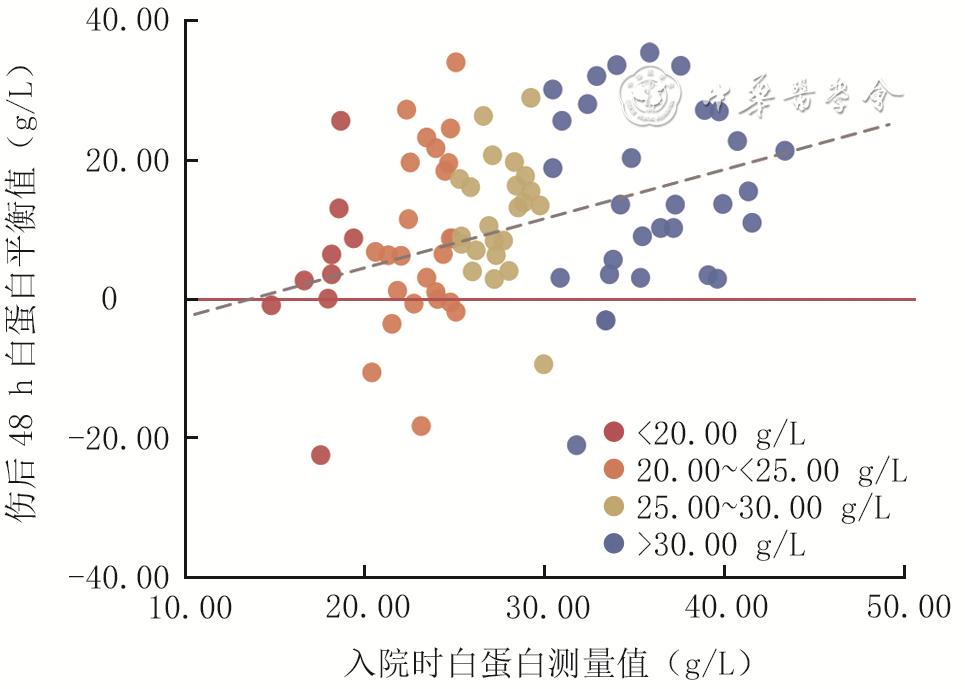
| Citation: | Sun Ranran,Lang Jingyuan,Gao Shijie,et al.Analysis of the relationship between albumin balance status during the shock phase and MODS in patients with severe burns and the risk factors for the occurrence of negative albumin balance[J].Chin J Burns Wounds,2026,42(10):1-9.DOI: 10.3760/cma.j.cn501225-20250616-00268.

|

| [1] |
JeschkeMG,van BaarME,ChoudhryMA,et al.Burn injury[J].Nat Rev Dis Primers,2020,6(1):11.DOI: 10.1038/s41572-020-0145-5.
|
| [2] |
中国老年医学学会烧创伤分会.烧伤休克防治全国专家共识(2020版)[J].中华烧伤杂志,2020,36(9):786-792.DOI: 10.3760/cma.j.cn501120-20200623-00323.
|
| [3] |
CartottoR, JohnsonLS, SavetamalA, et al. American Burn Association Clinical Practice Guidelines on burn shock resuscitation[J]. J Burn Care Res,2024,45(3):565-589.DOI: 10.1093/jbcr/irad125.
|
| [4] |
HaberalM, Sakallioglu AbaliAE, KarakayaliH. Fluid management in major burn injuries[J]. Indian J Plast Surg,2010,43(Suppl):S29-S36.DOI: 10.4103/0970-0358.70715.
|
| [5] |
DemlingRH.The incidence and impact of pre-existing protein energy malnutrition on outcome in the elderly burn patient population[J].J Burn Care Rehabil,2005,26(1):94-100.DOI: 10.1097/01.bcr.0000150302.71007.80.
|
| [6] |
LehnhardtM,JafariHJ,DrueckeD,et al.A qualitative and quantitative analysis of protein loss in human burn wounds[J].Burns,2005,31(2):159-167.DOI: 10.1016/j.burns.2004.08.015.
|
| [7] |
SoetersPB, WolfeRR, ShenkinA. Hypoalbuminemia: pathogenesis and clinical significance[J]. JPEN J Parenter Enteral Nutr,2019,43(2):181-193.DOI: 10.1002/jpen.1451.
|
| [8] |
ChenYF, MaH, PerngCK, et al. Albumin supplementation may have limited effects on prolonged hypoalbuminemia in major burn patients: an outcome and prognostic factor analysis[J]. J Chin Med Assoc,2020,83(2):206-210.DOI: 10.1097/JCMA.0000000000000245.
|
| [9] |
CooperAB,CohnSM,ZhangHS,et al.Five percent albumin for adult burn shock resuscitation: lack of effect on daily multiple organ dysfunction score[J].Transfusion,2006,46(1):80-89.DOI: 10.1111/j.1537-2995.2005.00667.x.
|
| [10] |
LambdenS,LaterrePF,LevyMM,et al.The SOFA score-development, utility and challenges of accurate assessment in clinical trials[J].Crit Care,2019,23(1):374.DOI: 10.1186/s13054-019-2663-7.
|
| [11] |
NavickisRJ, GreenhalghDG, WilkesMM. Albumin in burn shock resuscitation: a meta-analysis of controlled clinical studies[J]. J Burn Care Res,2016,37(3):e268-e278.DOI: 10.1097/BCR.0000000000000201.
|
| [12] |
ZdolsekM,HahnRG,SjöbergF,et al.Plasma volume expansion and capillary leakage of 20% albumin in burned patients and volunteers[J].Crit Care,2020,24(1):191.DOI: 10.1186/s13054-020-02855-0.
|
| [13] |
HasselgrenE, ZdolsekM, ZdolsekJH, et al. Long intravascular persistence of 20% albumin in postoperative patients[J]. Anesth Analg,2019,129(5):1232-1239.DOI: 10.1213/ANE.0000000000004047.
|
| [14] |
SharmaHK, PageSS. Protein deficiency and related metabolic disturbances and its effects on drug metabolism in patients with burns[J]. Indian J Burns,2024,32(1):1-6.DOI: 10.4103/ijb.ijb_1_24.
|
| [15] |
SaraviB,GoebelU,HassenzahlLO,et al.Capillary leak and endothelial permeability in critically ill patients: a current overview[J].Intensive Care Med Exp,2023,11(1):96.DOI: 10.1186/s40635-023-00582-8.
|
| [16] |
OhWS, ChonSB. Calculation of the residual blood volume after acute, non-ongoing hemorrhage using serial hematocrit measurements and the volume of isotonic fluid infused: theoretical hypothesis generating study[J]. J Korean Med Sci,2016,31(5):814-816.DOI: 10.3346/jkms.2016.31.5.814.
|
| [17] |
LevittDG,LevittMD.Human serum albumin homeostasis: a new look at the roles of synthesis, catabolism, renal and gastrointestinal excretion, and the clinical value of serum albumin measurements[J].Int J Gen Med,2016,9:229-255.DOI: 10.2147/IJGM.S102819.
|
| [18] |
吴军,罗高兴. 烧伤免疫研究进展[J]. 中华烧伤杂志,2004,20(6):321-323.DOI: 10.3760/cma.j.issn.1009-2587.2004.06.101.
|
| [19] |
VincentJL,DuboisMJ,NavickisRJ,et al.Hypoalbuminemia in acute illness: is there a rationale for intervention? A meta-analysis of cohort studies and controlled trials[J].Ann Surg,2003,237(3):319-334.DOI: 10.1097/01.SLA.0000055547.93484.87.
|
| [20] |
YeTTS, VishnuK S, DahilA, et al. Serum albumin on admission: a prognostic marker of morbidity and mortality in burns? A systematic review and meta-analysis[J]. J Burn Care Res,2026,47(5):1530-1542.DOI: 10.1093/jbcr/irag092.
|
| [21] |
BandeiraNG, BarrosoMVVS, MatosMAA, et al. Serum albumin concentration on admission as a predictor of morbidity and mortality in patients with burn injuries[J]. J Burn Care Res,2021,42(5):991-997.DOI: 10.1093/jbcr/irab004.
|
| [22] |
NadlerSB,HidalgoJH,BlochT.Prediction of blood volume in normal human adults[J].Surgery,1962,51(2):224-232.
|
| [23] |
WangB,ChenG,CaoY,et al.Correlation of lactate/albumin ratio level to organ failure and mortality in severe sepsis and septic shock[J].J Crit Care,2015,30(2):271-275.DOI: 10.1016/j.jcrc.2014.10.030.
|
| [24] |
DeitchEA.Intestinal permeability is increased in burn patients shortly after injury[J].Surgery,1990,107(4):411-416.
|
| [25] |
SingerM, DeutschmanCS, SeymourCW, et al. The third international consensus definitions for sepsis and septic shock (Sepsis-3)[J]. JAMA,2016,315(8):801-810.DOI: 10.1001/jama.2016.0287.
|
| [26] |
WeissSJ.Tissue destruction by neutrophils[J].N Engl J Med,1989,320(6):365-376.DOI: 10.1056/NEJM198902093200606.
|
| [27] |
FerreiraFL,BotaDP,BrossA,et al.Serial evaluation of the SOFA score to predict outcome in critically ill patients[J].JAMA,2001,286(14):1754-1758.DOI: 10.1001/jama.286.14.1754.
|
| [28] |
LiF,HeQ,PengH,et al.The systemic inflammation indexes after admission predict in-hospital mortality in patients with extensive burns[J].Burns,2024,50(4):980-990.DOI: 10.1016/j.burns.2024.01.020.
|
| [29] |
UrbanowiczT, MichalakM, Olasińska-WiśniewskaA, et al. Neutrophil counts, neutrophil-to-lymphocyte ratio, and systemic inflammatory response index (SIRI) predict mortality after off-pump coronary artery bypass surgery[J]. Cells,2022,11(7):1124.DOI: 10.3390/cells11071124.
|
| [30] |
HuB,YangXR,XuY,et al.Systemic immune-inflammation index predicts prognosis of patients after curative resection for hepatocellular carcinoma[J].Clin Cancer Res,2014,20(23):6212-6222.DOI: 10.1158/1078-0432.CCR-14-0442.
|
| [31] |
QiQ,ZhuangL,ShenY,et al.A novel systemic inflammation response index (SIRI) for predicting the survival of patients with pancreatic cancer after chemotherapy[J].Cancer,2016,122(14):2158-2167.DOI: 10.1002/cncr.30057.
|
| [32] |
XiaY, XiaC, WuL, et al. Systemic immune inflammation index (SII), system inflammation response index (SIRI) and risk of all-cause and cardiovascular mortality: a 20-year follow-up cohort study of 42,875 US adults[J]. J Clin Med,2023,12(3):1128.DOI: 10.3390/jcm12031128.
|
| [33] |
JeschkeMG,MlcakRP,FinnertyCC,et al.Burn size determines the inflammatory and hypermetabolic response[J].Crit Care,2007,11(4):R90.DOI: 10.1186/cc6102.
|
| [34] |
GabayC,KushnerI.Acute-phase proteins and other systemic responses to inflammation[J].N Engl J Med,1999,340(6):448-454.DOI: 10.1056/NEJM199902113400607.
|
| [35] |
FinnertyCC,HerndonDN,PrzkoraR,et al.Cytokine expression profile over time in severely burned pediatric patients[J].Shock,2006,26(1):13-19.DOI: 10.1097/01.shk.0000223120.26394.7d.
|
| [36] |
XiaoW,MindrinosMN,SeokJ,et al.A genomic storm in critically injured humans[J].J Exp Med,2011,208(13):2581-2590.DOI: 10.1084/jem.20111354.
|
| [37] |
MartiniWZ,WolfSE,ChinkesDL,et al.Enhanced albumin synthesis in severely burned adults[J].Shock,2010,34(4):364-368.DOI: 10.1097/SHK.0b013e3181d8844b.
|
| [38] |
CartottoR, CallumJ. A review on the use of plasma during acute burn resuscitation[J]. J Burn Care Res,2020,41(2):433-440.DOI: 10.1093/jbcr/irz184.
|
| [39] |
SaffleJI.The phenomenon of "fluid creep" in acute burn resuscitation[J].J Burn Care Res,2007,28(3):382-395.DOI: 10.1097/BCR.0B013E318053D3A1.
|
| [40] |
XuZ, ZhangK, LiuD, et al. Predicting mortality and risk factors of sepsis related ARDS using machine learning models[J]. Sci Rep,2025,15(1):13509.DOI: 10.1038/s41598-025-96501-w.
|
Figures(2) / Tables(2)
Copyright © Chinese Journal of Burns京ICP备07035254号-14
E-mail:shaoshangzazhi@163.com
Supported by:
Beijing Renhe Information Technology Co. Ltd


 DownLoad: