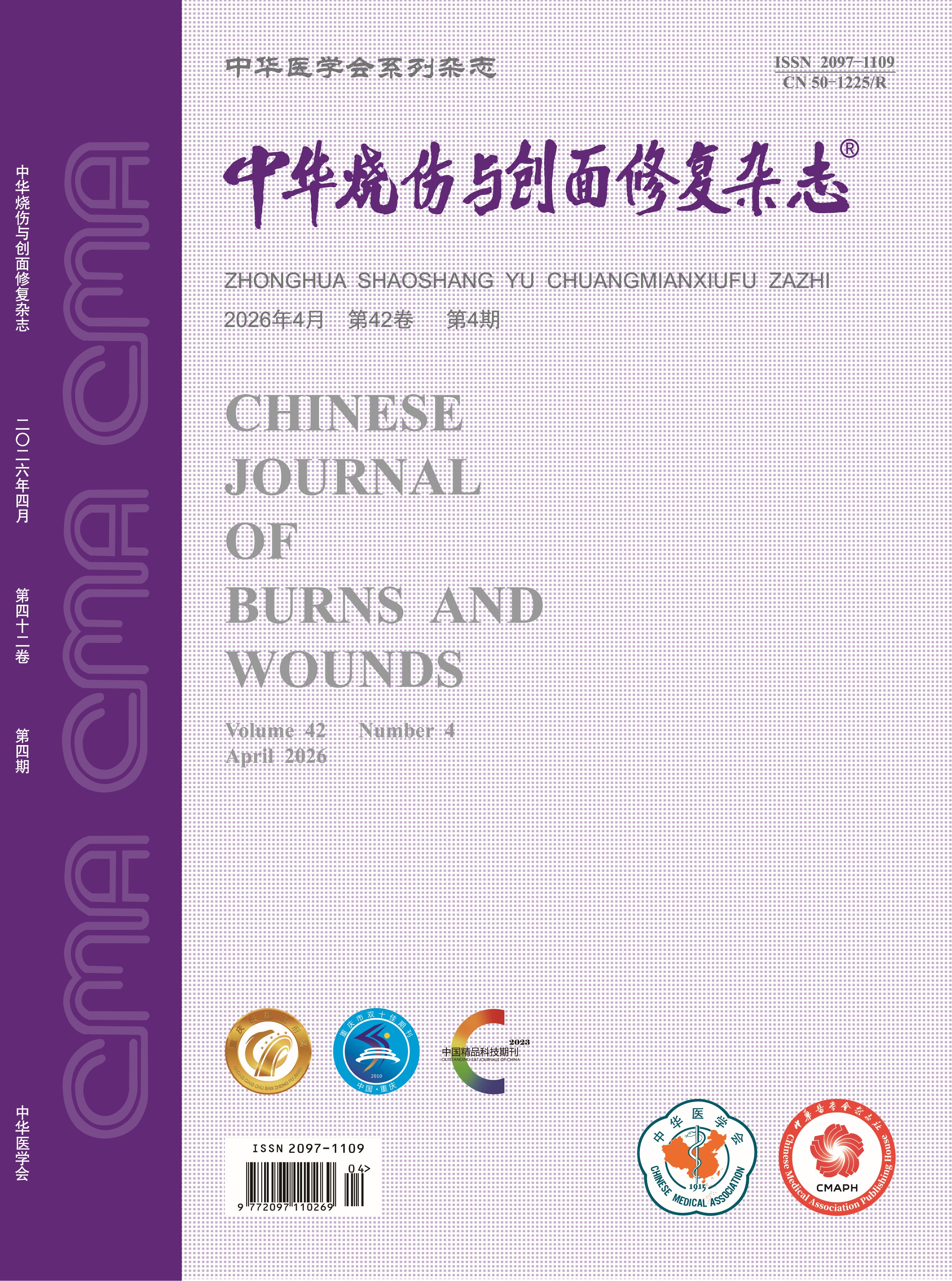
Volume 42 Issue 4
Apr.  2026
Turn off MathJax
Article Contents
Wang Y,Zhao YH,Liu J,et al.Characteristics analysis and trend projection of burn disease burden among middle-aged and elderly population in China based on the GBD 2021 database[J].Chin J Burns Wounds,2026,42(4):373-382.DOI: 10.3760/cma.j.cn501225-20250710-00296.
Citation: Wang Y,Zhao YH,Liu J,et al.Characteristics analysis and trend projection of burn disease burden among middle-aged and elderly population in China based on the GBD 2021 database[J].Chin J Burns Wounds,2026,42(4):373-382.DOI: 10.3760/cma.j.cn501225-20250710-00296.

Characteristics analysis and trend projection of burn disease burden among middle-aged and elderly population in China based on the GBD 2021 database

doi: 10.3760/cma.j.cn501225-20250710-00296
More Information
  •   Objective  To analyze the characteristics of burn disease (hereinafter referred to as "this type of disease") burden among Chinese middle-aged and elderly population (≥55 years) based on the Global Burden of Disease (GBD) 2021 database and to project its trends.  Methods  This study was a secondary study based on public databases. Core indicators of this type of disease in China from 1990 to 2021 were extracted from the GBD 2021 database, including the incident cases, incidence, deaths, mortality, disability-adjusted life years (DALYs), DALY rate, and their standardized rates. Analyses were conducted using age-period-cohort model, Joinpoint regression model, and Das Gupta decomposition analysis. An autoregressive integrated moving average model was constructed to project the burden trends of this type of disease in China in 2030.  Results  In 2021, the total incident cases, deaths, and DALYs of this type of disease in China were 9.55 (7.23-12.76)×10⁴, 7 579 (5 525-9 184), and 22.01 (16.94-28.05)×10⁴, respectively, all higher than 4.21 (3.05-5.70)×10⁴, 5 550 (4 056-6 454), and 16.92 (13.78-20.16)×10⁴ in 1990. The total incidence, mortality, DALY rate, and standardized DALY rate in 2021 were 25.22 (19.10-33.69)×10-5, 2.00 (1.46-2.42)×10-5, 58.11 (44.73-74.03)×10-5, and 33.64 (27.01-41.78)×10-5, respectively, all lower than 29.37 (21.29-39.75)×10-5, 3.87 (2.83-4.50)×10-5, 117.95 (96.03-140.53)×10-5, and 135.58 (109.77-158.36)×10-5 in 1990. Joinpoint regression model analysis showed that the total standardized incidence, standardized mortality, and standardized DALY rate of this type of disease in China decreased significantly from 1990 to 2021, with average annual percent changes of -0.33%, -3.97%, and -4.83%, respectively (P<0.05). Age-period-cohort model analysis showed that, compared with the general population, across age groups of 55-59, 60-64, 65-69, 70-74, 75-79, 80-84, 85-89, 90-94, and ≥95 years, the incidence risk of this type of disease in China presented significant changes (with RR (95% CI) of 1.054 (1.012-1.099), 0.949 (0.919-0.979), 0.800 (0.783-0.818), 0.724 (0.714-0.735), 0.713 (0.703-0.722), 0.916 (0.899-0.934), 1.165 (1.133-1.199), 1.361 (1.305-1.419), and 1.666 (1.559-1.780), respectively, P<0.05), and the mortality risk of this type of disease changed significantly (with RR (95% CI) of 0.208 (0.198-0.218), 0.229 (0.220-0.239), 0.331 (0.320-0.343), 0.551 (0.536-0.566), 0.897 (0.875-0.920), 1.778 (1.732-1.826), 3.222 (3.118-3.330), 4.653 (4.447-4.868), and 4.811 (4.451-5.201), respectively, P<0.05); the incidence risk of this type of disease peaked and changed significantly during 2020-2021 (with RR (95% CI) of 1.034 (1.002-1.069), P<0.05), and the mortality risk of this type of disease changed significantly during the time periods of 1990-1994, 1995-1999, 2005-2009, 2010-2014, 2015-2019, and 2020-2021 (with RR (95% CI) of 1.195 (1.153-1.239), 1.037 (1.005-1.070), 1.031 (1.007-1.055), 0.965 (0.942-0.989), 0.896 (0.871-0.922), and 0.920 (0.888-0.954), respectively, P<0.05); the incidence risk of this type of disease changed significantly during the birth cohorts of 1915-1919, 1920-1924, 1925-1929, 1930-1934, 1935-1939, 1945-1949, 1950-1954, 1955-1959, 1960-1964, 1965-1969 (with RR (95% CI) of 1.102 (1.031-1.178), 1.113 (1.053-1.176), 1.102 (1.055-1.152), 1.081 (1.046-1.118), 1.051 (1.027-1.076), 0.977 (0.969-0.986), 0.928 (0.916-0.940), 0.896 (0.877-0.916), 0.891 (0.863-0.920), and 0.893 (0.855-0.933), respectively, P<0.05), and the mortality risk of this type of disease changed significantly during the birth cohorts of 1895-1899, 1900-1904, 1905-1909, 1910-1914, 1915-1919, 1920-1924, 1925-1929, 1930-1934, 1935-1939, 1940-1944, 1945-1949, 1950-1954, 1955-1959, 1960-1964, 1965-1969 (with RR (95% CI) of 1.751 (1.273-2.411), 1.650 (1.434-1.900), 1.542 (1.400-1.698), 1.519 (1.404-1.643), 1.460 (1.366-1.561), 1.330 (1.256-1.408), 1.195 (1.139-1.253), 1.068 (1.027-1.112), 0.967 (0.936-0.999), 0.863 (0.836-0.890), 0.765 (0.740-0.792), 0.677 (0.651-0.703), 0.590 (0.563-0.619), 0.522 (0.489-0.556), and 0.448 (0.406-0.494), respectively, P<0.05). Das Gupta decomposition analysis indicated that population growth was the core factor contributing to the increase in incident cases of this type of disease in China (with total contribution rate of 98.15%), and epidemiological changes were the main driving force behind the reduction in deaths of this type of disease in China (with total contribution rate of 170.02%). Autoregressive integrated moving average model projections suggested that by 2030, the incident cases of this type of disease in China would rise to 13.35 (10.58-16.12)×10⁴, deaths would stabilize at 7 642 (6 076-9 208), and DALYs would increase to 23.71 (20.86-26.55)×10⁴; meanwhile, the incidence would drop to 23.59 (21.97-25.20)×10-5, mortality would drop to 1.47 (0.71-2.23)×10-5, and DALY rate would drop to 41.17 (28.39-53.95)×10-5.  Conclusions  The absolute burden of this type of disease in China from 1990 to 2021 has increased, while the incidence, mortality, and DALY rate have decreased. Population growth and epidemiological changes have driven the rise in incident cases and the decline in deaths, respectively. This type of disease burden in China is expected to keep growing in the future.


  • loading
  • [1]
    王萍萍人口总量降幅收窄,人口素质持续提升国家统计局20252025-01-172025-06-24https://www.stats.gov.cn/sj/sjjd/202501/t20250117_1958337.html

    王萍萍.人口总量降幅收窄,人口素质持续提升[EB/OL]. 国家统计局.2025(2025-01-17)[2025-06-24]. https://www.stats.gov.cn/sj/sjjd/202501/t20250117_1958337.html.

    [2]
    JeschkeMG, PhelanHA, WolfS, et al. State of the science burn research: burns in the elderly[J]. J Burn Care Res, 2020,41(1):65-83.DOI: 10.1093/jbcr/irz163.
    [3]
    杨长发, 闵定宏, 郭光华. 老年烧伤感染的防治研究进展[J]. 中华烧伤与创面修复杂志, 2023,39(3):285-289.DOI: 10.3760/cma.j.cn501225-20220321-00078.
    [4]
    WuH, XiM, XieW. Epidemiological and clinical characteristics of older adults with burns: a 15-year retrospective analysis of 2554 cases in Wuhan Institute of Burns[J]. BMC Geriatr, 2023,23(1):162.DOI: 10.1186/s12877-023-03883-5.
    [5]
    吴首臣, 王大鹏, 随永敏. 削痂植皮术联合负压封闭引流、纳米银医用抗菌敷料治疗深度烧伤的临床效果[J]. 组织工程与重建外科杂志, 2025,21(5):479-485.DOI: 10.3969/j.issn.1673-0364.2025.05.011.
    [6]
    郭绍彬, 唐世杰, 张万聪. 1990—2019年全球烧伤疾病负担变化趋势及地区差异[J]. 汕头大学医学院学报, 2023,36(3):181-184.DOI: 10.13401/j.cnki.jsumc.2023.03.012.
    [7]
    王文盛老年严重烧伤患者单中心流行病学调查及早期脏器损伤特点的研究重庆陆军军医大学2019DOI:10.27001/d.cnki.gtjyu.2019.000294

    王文盛.老年严重烧伤患者单中心流行病学调查及早期脏器损伤特点的研究[D].重庆:陆军军医大学,2019. DOI:10.27001/d.cnki.gtjyu.2019.000294.

    [8]
    杨长发老年重症烧伤患者早期临床特征与治疗转归南昌南昌大学2023DOI:10.27232/d.cnki.gnchu.2023.000496

    杨长发.老年重症烧伤患者早期临床特征与治疗转归[D].南昌:南昌大学,2023. DOI:10.27232/d.cnki.gnchu.2023.000496.

    [9]
    YangJ, TianG, LiuJ, et al. Epidemiology and clinical characteristics of burns in mainland China from 2009 to 2018[J/OL]. Burns Trauma, 2022,10:tkac039[2025-07-10]. https://pubmed.ncbi.nlm.nih.gov/36196302/.DOI: 10.1093/burnst/tkac039.
    [10]
    张洁2013-2018年深圳市伤害住院病人特征与疾病负担及时间序列分析广州暨南大学2020DOI:10.27167/d.cnki.gjinu.2020.001516

    张洁.2013-2018年深圳市伤害住院病人特征与疾病负担及时间序列分析[D]. 广州:暨南大学, 2020.DOI:10.27167/d.cnki.gjinu.2020.001516.

    [11]
    郭绍彬, 唐世杰, 张万聪. 1990-2019年中国烧伤发病率及死亡率趋势的年龄-时期-队列模型分析[J]. 中国美容医学, 2023,32(7):9-13.DOI: 10.15909/j.cnki.cn61-1347/r.005773.
    [12]
    秦小锋近七年唐山地区烧伤患者流行病学调查分析唐山华北理工大学2022DOI:10.27108/d.cnki.ghelu.2022.000084

    秦小锋. 近七年唐山地区烧伤患者流行病学调查分析[D]. 唐山:华北理工大学, 2022.DOI:10.27108/d.cnki.ghelu.2022.000084.

    [13]
    付倩倩, 张苗苗, 杨晓宇, 等. 甘肃省某地区老年烧伤患者流行病学调查及分析[J]. 感染、炎症、修复, 2021,22(4):195-198.DOI: 10.3969/j.issn.1672-8521.2021.04.001.
    [14]
    韩雪伟高龄烧伤患者的临床特点及治疗分析石家庄河北医科大学2021DOI:10.27111/d.cnki.ghyku.2021.000394

    韩雪伟. 高龄烧伤患者的临床特点及治疗分析[D]. 石家庄:河北医科大学, 2021.DOI:10.27111/d.cnki.ghyku.2021.000394.

    [15]
    GBD Results2025-01-102025-02-19https://vizhub.healthdata.org/gbd-results

    GBD Results[EB/OL]. (2025-01-10) [2025-02-19]. https://vizhub.healthdata.org/gbd-results.

    [16]
    ChangL, ChenY, ZhouM, et al. Photothermal enhanced antibacterial chitosan-based polydopamine composite hydrogel for hemostasis and burn wound repairing[J]. Carbohydr Polym, 2024,345:122568.DOI: 10.1016/j.carbpol.2024.122568.
    [17]
    De La TejeraG, CoronaK, EfejukuT, et al. Early wound excision within three days decreases risks of wound infection and death in burned patients[J]. Burns, 2023,49(8):1816-1822.DOI: 10.1016/j.burns.2023.06.003.
    [18]
    张学文, 王赈霄, 盛基尧, 等. 5G技术在外科领域中的应用[J]. 中华消化外科杂志, 2020,19(5):482-485. DOI: 10.3760/cma.j.cn115610-20200423-00281.
    [19]
    信跃文, 董宁, 吴瑶, 等. 皮肤驻留调节性T细胞在烧伤创面愈合中的作用[J]. 解放军医学杂志, 2020,45(6):582-586.DOI: 10.11855/j.issn.0577-7402.2020.06.02.
    [20]
    闫丹萍, 王钰炜, 王飒. 1例特重度烧伤伴吸入性损伤患者并发喉痉挛的急救护理[J]. 中华护理杂志, 2023,58(21):2650-2653.DOI: 10.3761/j.issn.0254-1769.2023.21.013.
    [21]
    王虎峰, 郭胜鹏. 全民健康覆盖视域下健康中国行动政策演进分析[J]. 卫生经济研究, 2024,41(1):41-44.DOI: 10.14055/j.cnki.33-1056/f.2024.01.010.
    [22]
    付小兵. 从“三南”经验看中国特色创面修复学科体系建设在基层的实践[J]. 中华烧伤与创面修复杂志, 2026,42(1):1-6.DOI: 10.3760/cma.j.cn501225-20251119-00475.
    [23]
    陈永江西烧伤中心老年烧伤患者流行病学特征回顾性分析南昌南昌大学2022DOI:10.27232/d.cnki.gnchu.2022.000690

    陈永. 江西烧伤中心老年烧伤患者流行病学特征回顾性分析[D]. 南昌:南昌大学, 2022.DOI:10.27232/d.cnki.gnchu.2022.000690.

    [24]
    WearnC, HardwickeJ, KitsiosA, et al. Outcomes of burns in the elderly: revised estimates from the Birmingham Burn Centre[J]. Burns, 2015,41(6):1161-1168.DOI: 10.1016/j.burns.2015.04.008.
    [25]
    WangC, LeeJ, KhvatovaE. Age as a predictor of burn-related outcomes in older adults in low- and middle-income countries[J]. Innov Aging, 2024,8:223.DOI: 10.1093/geroni/igae098.0721.
    [26]
    JeschkeMG, PatsourisD, StanojcicM, et al. Pathophysiologic response to burns in the elderly[J]. EBioMedicine, 2015,2(10):1536-1548.DOI: 10.1016/j.ebiom.2015.07.040.
    [27]
    LebrasseurA, Fortin-BédardN, LettreJ, et al. Impact of the COVID-19 pandemic on older adults: rapid review[J]. JMIR Aging, 2021,4(2):e26474.DOI: 10.2196/26474.
    [28]
    郑霄雁, 王依妹, 官陈平, 等. 福州市新型冠状病毒感染致重症的危险因素分析[J]. 解放军医学杂志, 2024,49(3):297-301.DOI: 10.11855/j.issn.0577-7402.0929.2023.0907.
    [29]
    姚咏明, 任超. 烧伤感染与免疫紊乱:从发病机制到精准诊疗的转化医学新视野[J]. 中华烧伤与创面修复杂志, 2026,42(2):119-125.DOI: 10.3760/cma.j.cn501225-20251104-00457.
    [30]
    ChanaNK, YarwoodJ, SmithJ. Burn injuries in the older population and understanding the common causes to influence accident prevention[J]. Burns, 2023,49(4):848-853.DOI: 10.1016/j.burns.2022.06.013.
    [31]
    QianW, WangS, WangY, et al. Epidemiological and clinical characteristics of burns in the older person: a seven-year retrospective analysis of 693 cases at a burn center in south-west China[J/OL]. Burns Trauma, 2020,8:tkz005[2025-07-10]. https://pubmed.ncbi.nlm.nih.gov/32346542/. DOI: 10.1093/burnst/tkz005.
    [32]
    SalyerCE, BomholtC, BeckmannN, et al. Novel therapeutics for the treatment of burn infection[J]. Surg Infect (Larchmt), 2021,22(1):113-120.DOI: 10.1089/sur.2020.104.
    [33]
    WangW, ZhangJ, LvY, et al. Epidemiological investigation of elderly patients with severe burns at a major burn center in southwest China[J]. Med Sci Monit, 2020,26:e918537.DOI: 10.12659/MSM.918537.
    [34]
    GrantEJ. Burn injuries prevention, advocacy, and legislation[J]. Clin Plast Surg, 2017,44(3):451-456.DOI: 10.1016/j.cps.2017.02.005.
    [35]
    SavetamalA. Infection in elderly burn patients: what do we know?[J]. Surg Infect (Larchmt), 2021,22(1):65-68.DOI: 10.1089/sur.2020.322.
    [36]
    薛婧杰, 陈玉秋, 杨杰, 等. 成批烧伤患者跨境航空医疗转运的精准化护理[J]. 中国急救复苏与灾害医学杂志, 2025,20(5):663-666.DOI: 10.3969/j.issn.1673-6966.2025.05.023.
    [37]
    姚咏明,张卉,童亚林. 深化对烧伤脓毒症诊断体系与治疗策略的认识[J]. 中华烧伤杂志,2021,37(5):404-409.DOI: 10.3760/cma.j.cn501120-20200703-00337.
    [38]
    AlmeidaA, AlvarengaV, EgiptoP, et al. Clinical outcomes among elderly people with burns[J]. Ann Burns Fire Disasters, 2023,36(3):191-201.DOI: 10.3760/cma.j.cn501120-20200703-00337.
    [39]
    于家傲, 张修航. 数字化技术赋能烧伤康复:新范式与未来展望[J]. 中华烧伤与创面修复杂志, 2025,41(12):1132-1138.DOI: 10.3760/cma.j.cn501225-20250918-00398.
    [40]
    黄雪赞, 廖永刚, 唐石树, 等. 1990至2021年中国职业性噪声暴露所致听力损失的疾病负担研究及预测分析[J]. 中华劳动卫生职业病杂志, 2026,44(2):98-105.DOI: 10.3760/cma.j.cn121094-20240902-00410.
  • 加载中

Catalog

    通讯作者: 陈斌, bchen63@163.com
    • 1. 

      沈阳化工大学材料科学与工程学院 沈阳 110142

    1. 本站搜索
    2. 百度学术搜索
    3. 万方数据库搜索
    4. CNKI搜索

    Figures(1)  / Tables(5)

    Article Metrics

    Article views (48) PDF downloads(9) Cited by()
    Proportional views
    Related

    /

    DownLoad:  Full-Size Img  PowerPoint
    Return
    Return