Turn off MathJax
Article Contents
Deng Bihan,Cheng xinyue,Zhu Xiaomei,et al.Establishing a rat model of sepsis by combining seawater immersion with Vibrio vulnificus infection after burns[J].Chin J Burns Wounds,2026,42(2):1-10.DOI: 10.3760/cma.j.cn501225-20251017-00432.
Citation: Deng Bihan,Cheng xinyue,Zhu Xiaomei,et al.Establishing a rat model of sepsis by combining seawater immersion with Vibrio vulnificus infection after burns[J].Chin J Burns Wounds,2026,42(2):1-10.DOI: 10.3760/cma.j.cn501225-20251017-00432.

Establishing a rat model of sepsis by combining seawater immersion with Vibrio vulnificus infection after burns

doi: 10.3760/cma.j.cn501225-20251017-00432
Funds:

Key Project of National Natural Science Foundation of China 82130062

General Project of National Natural Science Foundation of China 82272200

Key Project supported by the Medical Science and Technology Development Foundation,Nanjing Department of Health ZKX24011

Jiangsu Province Cadre Health Care Project BJ23031

  • Received Date: 2025-10-17
    Available Online: 2026-02-09
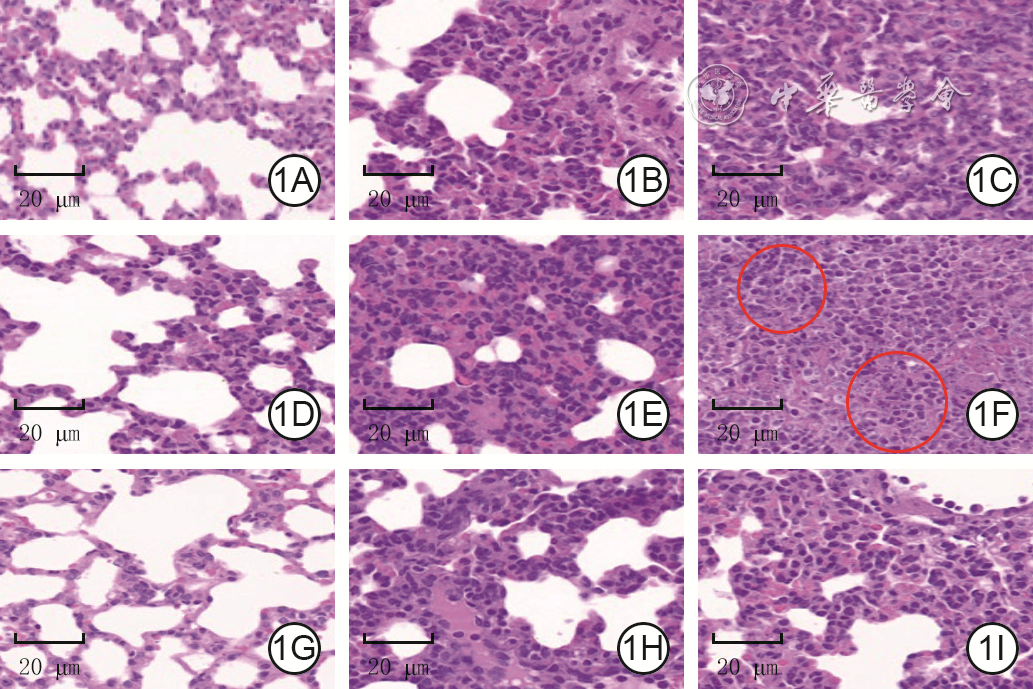
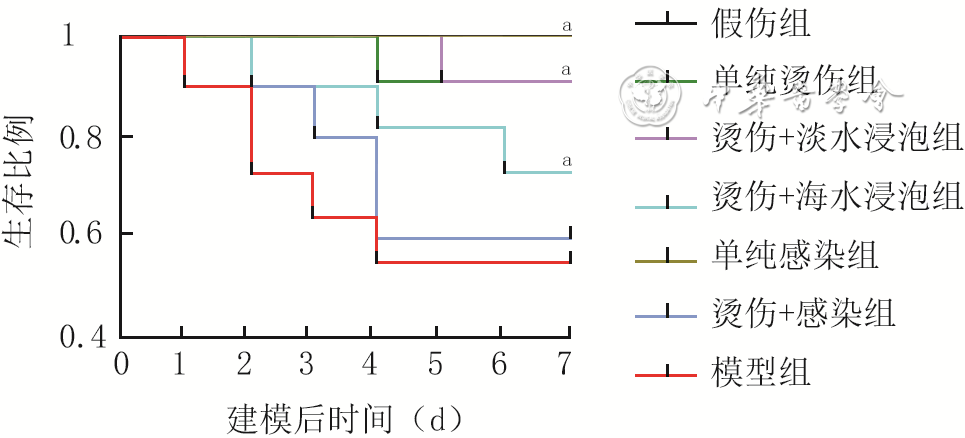
  •   Objective  To establish a rat model of sepsis induced by combining seawater immersion with Vibrio vulnificus infection after burns, providing an experimental basis for research on marine burn wound-associated sepsis.  Methods  This study was conducted using an experimental animal model. A total of 115 eight-week-old male Sprague Dawley rats were randomly allocated using a random number table (grouping method was the same as below) into three groups: burn+seawater immersion+infection group (model group for short, n=45), burn-only group (n=40), and sham injury group (n=30). Rats in the first two groups received standardized dorsal burn injury, followed by either artificial seawater immersion for 30 min+subcutaneous injection of Vibrio vulnificus or injection of an equal volume of normal saline, respectively. In sham injury group, the dorsal region was immersed in warm water to induce sham injury, followed by injection of an equal volume of normal saline. On 1, 3, and 5 days after modeling, hematoxylin-eosin staining was performed to evaluate histopathological changes in the liver, kidney, lung, and heart in the three groups of rats, the pathological damage of the aforementioned organs was evaluated using a semi-quantitative scoring system. According to the instructions of the kit, an enzyme-linked immunosorbent assay reader was used to detect the contents of aspartate aminotransferase (AST), alanine aminotransferase (ALT), blood urea nitrogen, creatinine, creatine kinase isoenzyme (CK-MB), lactate dehydrogenase (LDH), and myeloperoxidase (MPO) in the serum of the three groups of rats, to reflect the degree of liver, kidney and heart injury. Fresh lung tissues in the three groups of rats were weighed and then dried to a constant weight to calculate the lung wet-to-dry weight ratio. In addition, the proportions of helper T cells, B cells, and cytotoxic T cells in peripheral blood of rats in sham and model groups were determined by flow cytometry. Serum levels of inflammatory cytokines in the three groups of rats, including IL-6, IL-10, IL-1β, and TNF-α, were measured using enzyme-linked immunosorbent assay. An additional 70 eight-week-old male Sprague Dawley rats were randomly assigned to seven groups (with each group of 10 rats): sham, burn-only, burn+freshwater immersion, burn+seawater immersion, burn+infection, infection-only, and model groups. The rats in model, burn-only group and sham injury groups were treated as before. The rats in burn+freshwater immersion and burn+seawater immersion groups were first received dorsal burn injury, followed by 30 min immersion in freshwater or artificial seawater, respectively. Rats in infection-only group received subcutaneous injection of the same dose of Vibrio vulnificus at the corresponding dorsal site. Rats in burn+infection group first received dorsal burn injury and then injected with the same dose of Vibrio vulnificus 30 min after injury. Within 7 days after modeling, the survival status of the rats was observed every day and their survival rate was calculated.  Results  On 1, 3, and 5 days after modeling, the tissue structures of the liver, kidney, lung, and heart of rats in sham injury group were basically normal, and no obvious pathological damage was observed; the tissues of the aforementioned organs of rats in burn-only group had mild to moderate inflammatory reactions, with loose cytoplasm and obvious cellular edema, but the overall structure was basically normal; the tissues of the aforementioned organs of rats in model group showed obvious pathological changes, with the most severe changes on 3 days after modeling, mainly manifested as severe inflammatory reactions, tissue damage, and even necrosis. Compared with that in sham injury group, histopathological injury scores for the liver, kidney, lung, and heart of rats in model group were significantly increased on 1, 3, and 5 day after modeling (P<0.05). Compared with that in burn-only group, histopathological injury scores for the liver, kidney, lung, and heart of rats in model group were significantly increased on 1 day after modeling (P<0.05), and histopathological injury scores for the liver, kidney, and lung were significantly increased on 3 and 5 days after modeling (P<0.05). Compared with that in sham injury group, the serum levels of AST, ALT, blood urea nitrogen, creatinine, CK-MB, LDH, and MPO, as well as the lung wet-to-dry weight ratio of rats in model group were significantly increased on 1 day after modeling (P<0.05), and the serum levels of AST, ALT, blood urea nitrogen, creatinine, LDH, and MPO, as well as the lung wet-to-dry weight ratio were significantly increased on 3 and 5 days after modeling (P<0.05). Compared with that in burn-only group, the serum levels of AST, ALT, blood urea nitrogen, creatinine, CK-MB, LDH, and MPO, as well as the lung wet-to-dry weight ratio of rats in model group were significantly increased on 1 day after modeling (P<0.05), the serum levels of AST, ALT, creatinine, and LDH were significantly increased on 3 days after modeling (P<0.05),and the serum levels of AST, ALT, creatinine, LDH, and MPO on 5 days after modeling (P<0.05). On 1, 3, and 5 days after modeling, compared with that in sham injury group, the proportions of helper T cells, B cells, and cytotoxic T cells in peripheral blood of rats in model group were significantly increased (P<0.05). On 1, 3, and 5 days after modeling, the serum levels of IL-6, IL-10, IL-1β, and TNF-α of rats in model group were significantly higher than those in both sham injury and burn-only groups (P values all <0.05). on 7 days after modeling, the survival rate of rats in model group was only 50%, whereas it was 100% in both sham injury and infection-only groups. Within 7 days after modeling, the survival rate of rats in model group was significantly lower than that in sham, burn-only, burn+freshwater immersion, burn+seawater immersion, and infection-only groups (with χ2 values of 19.31, 12.11, 12.33, 9.01, and 17.61, respectively, P values all <0.05), but was comparable to that in burn+infection group (χ2=1.75, P>0.05).  Conclusions  Combining seawater immersion with Vibrio vulnificus infection after burns successfully established a rat model of sepsis. This model exhibited marked pathological alterations in major organs, significantly elevated inflammatory cytokine levels, increased proportions of immune cells including helper T cells, B cells, and cytotoxic T cells, and a markedly reduced survival rate, indicating that it is a reliable experimental animal model.


  • loading
  • [1]
    TadlockMD, EdsonTD, CancioJM, et al. War at sea: burn care challenges-past, present and future[J]. Eur Burn J, 2023,4(4):605-630. DOI: 10.3390/ebj4040041.
    [2]
    RaoD, KumarP, PrabhuV. Advancements in seawater immersion wound management: current treatments and innovations[J]. Int Wound J, 2024,21(10):e70070. DOI: 10.1111/iwj.70070.
    [3]
    Hernández-CabanyeroC, SanjuánE, FouzB, et al. The effect of the environmental temperature on the adaptation to host in the zoonotic pathogen Vibrio vulnificus[J]. Front Microbiol, 2020,11:489. DOI: 10.3389/fmicb.2020.00489.
    [4]
    中华预防医学会. 创伤弧菌感染诊治、预防专家共识[J]. 中华流行病学杂志, 2025, 46(7): 1142-1149.DOI: 10.3760/cma.j.cn112338-20250304-00132.
    [5]
    KimJS, LeeEG, ChunBC. Epidemiologic characteristics and case fatality rate of Vibrio vulnificus infection: analysis of 761 cases from 2003 to 2016 in Korea[J]. J Korean Med Sci, 2022,37(9):e79. DOI: 10.3346/jkms.2022.37.e79.
    [6]
    FleischmannS, HerrigI, WespJ, et al. Prevalence and distribution of potentially human pathogenic Vibrio spp. on German North and Baltic Sea Coasts[J]. Front Cell Infect Microbiol, 2022,12:846819. DOI: 10.3389/fcimb.2022.846819.
    [7]
    DiW, CuiJ, YuH, et al. Vibrio vulnificus necrotizing fasciitis with sepsis presenting with pain in the lower legs in winter: a case report[J]. BMC Infect Dis, 2022,22(1):670. DOI: 10.1186/s12879-022-07655-1.
    [8]
    BrossMH, SochK, MoralesR, et al. Vibrio vulnificus infection: diagnosis and treatment[J]. Am Fam Physician, 2007, 76(4): 539-544.
    [9]
    LiG, WangMY. The role of Vibrio vulnificus virulence factors and regulators in its infection-induced sepsis[J]. Folia Microbiol (Praha), 2020,65(2):265-274. DOI: 10.1007/s12223-019-00763-7.
    [10]
    RiedingerD, HassenrückC, HerlemannD, et al. Global distribution and predictive modeling of Vibrio vulnificus abundance[J]. Commun Earth Environ, 2025, 6:210.DOI: 10.1038/s43247-025-02182-8.
    [11]
    CandelliM, Sacco FernandezM, TriunfoC, et al. Vibrio vulnificus-A Review with a Special Focus on sepsis[J]. Microorganisms, 2025,13(1):128.DOI: 10.3390/microorganisms13010128.
    [12]
    林伟鹏, 穆旭, 陈胜华,等 11例创伤弧菌感染患者的临床特征及该病快速诊断流程的建立[J]. 中华烧伤与创面修复杂志, 2024, 40(3):266-272.DOI: 10.3760/cma.j.cn501225-20230803-00036.
    [13]
    中国医疗保健国际交流促进会烧伤医学分会, 《中华烧伤与创面修复杂志》编辑委员会. 烧伤侵袭性真菌感染诊断与防治实践指南(2024版)[J].中华烧伤与创面修复杂志,2024,40(7):604-617. DOI: 10.3760/cma.j.cn501225-20240103-00003.
    [14]
    Gibson-CorleyKN, OlivierAK, MeyerholzDK. Principles for valid histopathologic scoring in research[J]. Vet Pathol, 2013,50(6):1007-1015. DOI: 10.1177/0300985813485099.
    [15]
    SingerM, DeutschmanCS, SeymourCW, et al. The Third International Consensus Definitions for Sepsis and Septic Shock (Sepsis-3)[J]. JAMA, 2016,315(8):801-810. DOI: 10.1001/jama.2016.0287.
    [16]
    李成刚, 姜楠. 腹部开放性海水浸泡伤的病理生理变化与救治策略 [J]. 解放军医学院学报, 2021, 42(3): 350-352, 357.DOI: 10.3969/j.issn.2095-5227.2021.03.022.
    [17]
    贾赤宇, 尹斌, 张泽鑫. 重度烧伤的转录组学研究:价值与机遇[J]. 中华烧伤与创面修复杂志, 2024, 40(6): 514-520.DOI: 10.3760/cma.j.cn501225-20231026-00135.
    [18]
    SauaiaA, MooreFA, MooreEE. Postinjury inflammation and organ dysfunction[J]. Crit Care Clin, 2017,33(1):167-191. DOI: 10.1016/j.ccc.2016.08.006.
    [19]
    RemickDG, AyalaA, ChaudryIH, et al. Premise for standardized sepsis models[J]. Shock, 2019,51(1):4-9. DOI: 10.1097/SHK.0000000000001164.
    [20]
    杨宇轩, 王甲汉, 刘亮,等. 海水浸泡对浅Ⅱ度烫伤大鼠早期炎症反应及氧自由基损伤的影响[J]. 中华烧伤杂志, 2017, 33(6): 361-367.DOI: 10.3760/cma.j.issn.1009-2587.2017.06.015.
    [21]
    DedeepyaSD, GoelV, DesaiNN. Letter regarding: effects of irrigation with normal saline on traumatic brain injury combined with seawater immersion in rats[J]. J Surg Res, 2026,317:604-605. DOI: 10.1016/j.jss.2025.11.038.
    [22]
    PalmieriTL, HeardJ. Biomarkers of sepsis in burn injury: an update[J/OL]. Burns Trauma, 2025,13:tkae080[2025-10-17]. https://pubmed.ncbi.nlm.nih.gov/39822649/. DOI: 10.1093/burnst/tkae080.
    [23]
    洪广亮, 卢才教, 赵光举, 等. 创伤弧菌脓毒症诊疗方案(2018)[J].中华急诊医学杂志,2018,27(6):594-598. DOI: 10.3760/cma.j.issn.1671-0282.2018.06.005.
    [24]
    宋景春,丁仁彧,吕奔,等. 脓毒症性凝血病诊疗中国专家共识(2024版)[J]. 解放军医学杂志,2024,49(11):1221-1236. DOI: 10.11855/j.issn.0577-7402.1189.2024.0918.
    [25]
    LeeBC, KimMS, ChoiSH, et al. Involvement of capsular polysaccharide via a TLR2/NF-kappaB pathway in Vibrio vulnificus-induced IL-8 secretion of human intestinal epithelial cells [J]. Int J Mol Med, 2010, 25(4): 581-591.DOI: 10.3892/ijmm_00000380.
    [26]
    ConstantinescuMC, PerteaM, Avadanei-LucaS, et al. Variation of pro- and anti-inflammatory factors in severe burns: a systematic review[J]. Int J Mol Sci, 2025, 26(20):10131.DOI: 10.3390/ijms262010131.
    [27]
    RuddKE, JohnsonSC, AgesaKM, et al. Global, regional, and national sepsis incidence and mortality, 1990-2017: analysis for the Global Burden of Disease Study[J]. Lancet, 2020,395(10219):200-211. DOI: 10.1016/S0140-6736(19)32989-7.
    [28]
    肖盼, 张宇琼. 烧伤患者创面感染情况及影响因素分析[J]. 华南预防医学, 2023, 49(10): 1229-1232,1238.DOI: 10.12183/j.scjpm.2023.1229.
    [29]
    ZhangD, SongJ, ZhanJ, et al. The impact of ulinastatin on lymphocyte apoptosis and autophagy in sepsis patients[J]. Sci Rep, 2024,14(1):28791. DOI: 10.1038/s41598-024-79878-y.
    [30]
    孙炳伟,王逸凡,杨云稀. 中性粒细胞与烧伤脓毒症[J]. 中华烧伤与创面修复杂志,2024,40(7):618-624.DOI: 10.3760/cma.j.cn501225-20240329-00109.
    [31]
    LiuD, HuangSY, SunJH, et al. Sepsis-induced immunosuppression: mechanisms, diagnosis and current treatment options[J]. Mil Med Res, 2022,9(1):56. DOI: 10.1186/s40779-022-00422-y.
    [32]
    周岐原,李京宴,姚咏明,等. 脱嘌呤/脱嘧啶脱氧核糖核酸内切酶1对模拟脓毒症状态下小鼠树突状细胞铁死亡的作用[J]. 中华烧伤与创面修复杂志,2024,40(10):930-939.DOI: 10.3760/cma.j.cn501225-20240430-00159.
    [33]
    GaoX, CaiS, LiX, et al. Sepsis-induced immunosuppression: mechanisms, biomarkers and immunotherapy[J]. Front Immunol, 2025,16:1577105. DOI: 10.3389/fimmu.2025.1577105.
    [34]
    李亚楠, 郭素丽. 血常规指标及相关参数在脓毒症的研究进展[J]. 国际临床研究杂志, 2024, 8(6).DOI: 10.12208/j.ijcr.20240224.
    [35]
    WangZ, ZhangW, ChenL, et al. Lymphopenia in sepsis: a narrative review[J]. Crit Care, 2024,28(1):315. DOI: 10.1186/s13054-024-05099-4.
    [36]
    刘双庆, 祝筱梅, 姚咏明. 严重烧创伤脓毒症免疫功能障碍的诊疗策略[J]. 中华创伤杂志, 2025, 41(5):433-439.DOI: 10.3760/cma.j.cn501098-20250407-00197.
    [37]
    彭海伦,赵月丽,徐崇孝,等. 成人脓毒症分型研究进展[J]. 解放军医学杂志,2023,48(9):1107-1112. DOI: 10.11855/j.issn.0577-7402.1426.2022.0915.
    [38]
    范仕郡, 吴丹, 夏林, 等. 小鼠烧伤创面脓毒症模型的建立与评价[J]. 中国比较医学杂志, 2022, 32(6):7-13.DOI: 10.3969/j.issn.1671-7856.2022.06.002.
    [39]
    陈玉熹, 卢中秋, 邱俏檬, 等. 创伤弧菌脓毒症大鼠肺组织NF-κB和IL-18的基因表达以及药物的干预效应[J].中华医院感染学杂志, 2010, 20(3): 320-323.
    [40]
    QiaoRB, DaiWH, LiW, et al. The cytochrome P4501A1 (CYP1A1) inhibitor bergamottin enhances host tolerance to multidrug-resistant Vibrio vulnificus infection[J]. China J Traumatol, 2024,27(5):295-304. DOI: 10.1016/j.cjtee.2024.07.003.
  • 邓碧涵 2月5日.mp4
  • 加载中

Catalog

    通讯作者: 陈斌, bchen63@163.com
    • 1. 

      沈阳化工大学材料科学与工程学院 沈阳 110142

    1. 本站搜索
    2. 百度学术搜索
    3. 万方数据库搜索
    4. CNKI搜索

    Figures(3)  / Tables(4)

    Article Metrics

    Article views (61) PDF downloads(12) Cited by()
    Proportional views
    Related

    /

    DownLoad:  Full-Size Img  PowerPoint
    Return
    Return