Shen Tuo,
Ma Qimin,
Chu Zhigang,
Zhang Yi,
Tang Wenbin,
Cui Pei,
Li Xiaoliang,
Chang Liu,
Chen Zhaohong,
Chang Fei,
Liu Yongji,
Wu Choulang,
Guo Guanghua,
Zhu Feng
Abstract:
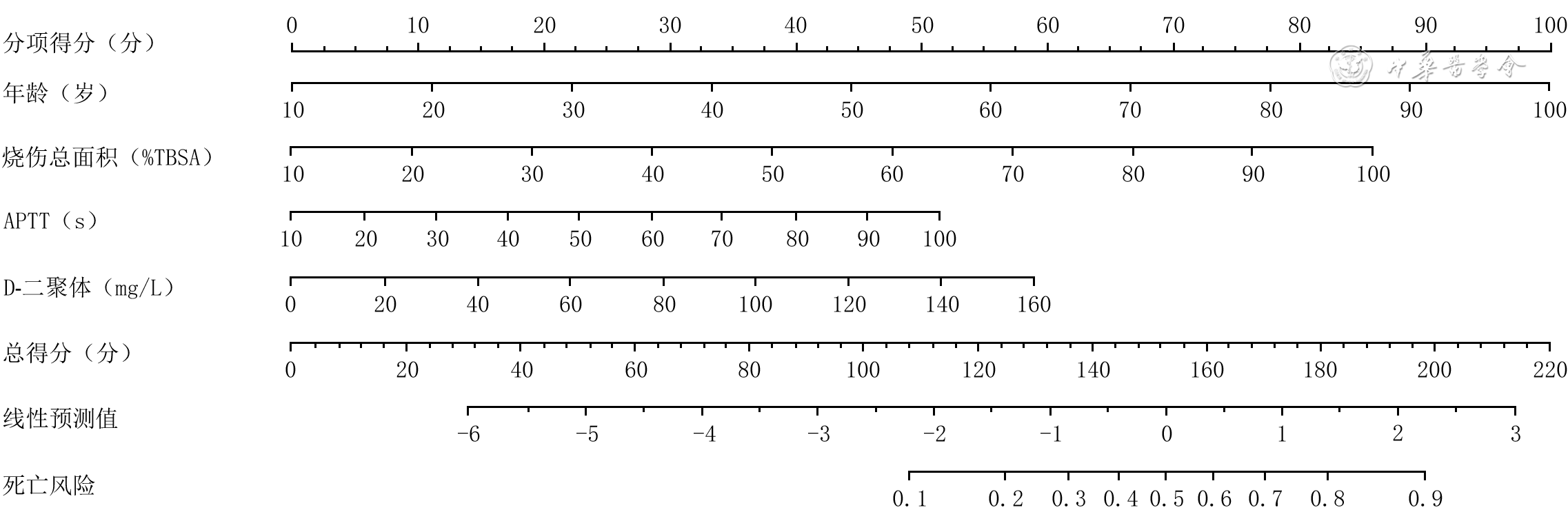
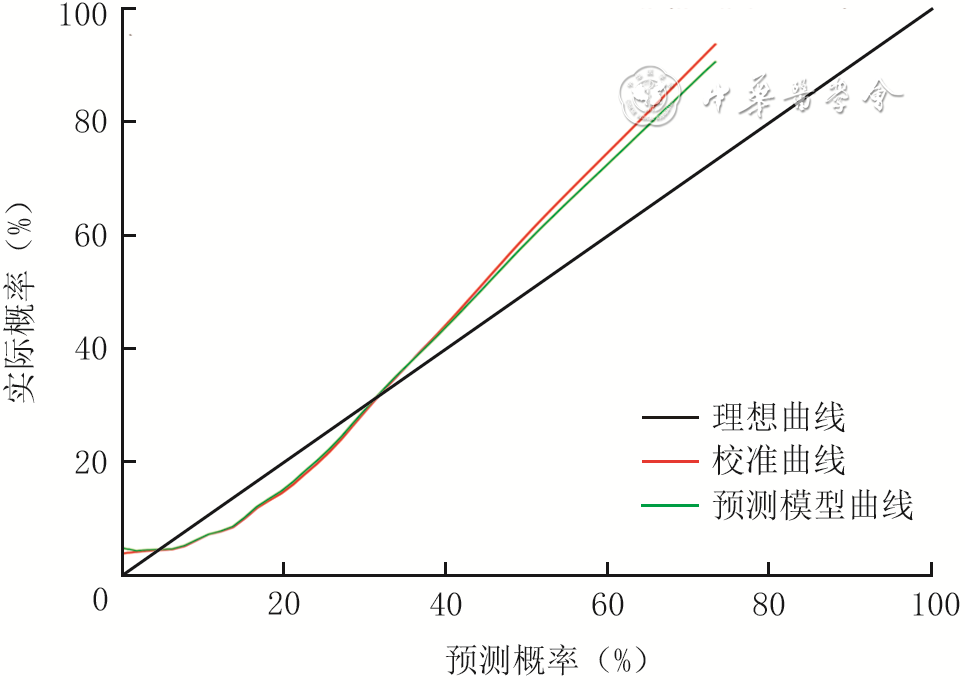
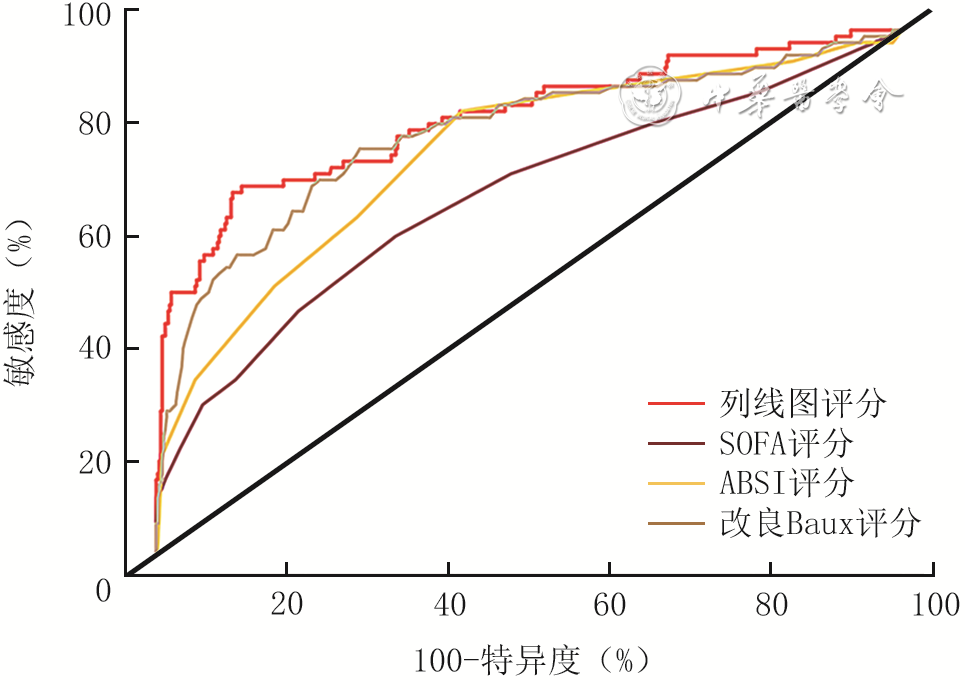
Objective To investigate the early coagulation characteristics and risk factors for prognosis of adult patients with severe burns. Methods This study was a retrospective study of case series. A total of 583 adult patients with severe burns who met the inclusion criteria were admitted to the 12 hospitals in China from January 2015 to December 2020, including 75 cases from the First Affiliated Hospital of Naval Medical University, 64 cases from Tongren Hospital of Wuhan University & Wuhan Third Hospital, 48 cases from the Affiliated Hospital of Nantong University, 146 cases from the Guangzhou Red Cross Hospital of Jinan University, 55 cases from the 924th Hospital of PLA, 46 cases from Zhengzhou First People's Hospital, 35 cases from the Fourth People's Hospital of Dalian, 20 cases from Fujian Medical University Union Hospital, 18 cases from Zhangjiagang First People's Hospital, 7 cases from Heilongjiang Provincial Hospital, 18 cases from Taizhou Hospital of Zhejiang Province, and 51 cases from the First Affiliated Hospital of Nanchang University. The general clinical characteristics (including gender, age, total burn area, degree of inhalation injury, and cause of burn) and coagulation function indicators within 24 hours after injury (including prothrombin time (PT), activated partial thromboplastin time (APTT), thrombin time (TT), international normalized ratio (INR), and D-dimer, fibrinogen (FIB), platelets (PLT), and serum total calcium levels) of patients were statistically analyzed. Based on the data of the above indicators, the sepsis-related organ failure assessment (SOFA) score, modified Baux score, and abbreviated burn severity index (ABSI) score of patients were calculated. According to the survival outcome within 28 days after injury, the patients were divided into survival group (499 cases) and death group (84 cases). General clinical characteristics and coagulation function indicators were compared between the 2 groups of patients. According to the severity of burns, patients were divided into three groups: severe burn group (185 cases ) with a total burn area <50% total body surface area (TBSA), extremely severe burn group (251 cases) with a total burn area ≥50% and <80%TBSA, and critical burn group (147 cases) with a total burn area ≥80%TBSA. Coagulation function indicators were compared among the 3 groups of patients. Based on the specific time of admission at the early stage of burns, patients with admission time <2 h, ≥2 h and <4 h, ≥4 h and <8 h, ≥8 h and <16 h, and ≥16 h and <24 h after burns were divided respectively into early burn group 1 (207 cases), early burn group 2 (158 cases), early burn group 3 (129 cases), early burn group 4 (54 cases), and early burn group 5 (35 cases), and the coagulation function indicators were compared among the 5 groups of patients. The independent risk factors affecting mortality 28 days after injury in 583 adult patients with severe burns were screened. A predictive nomogram was constructed based on the independent risk factors. Receiver operating characteristic (ROC) curves were constructed and the area under the curves (AUCs) was calculated for prediction models based on SOFA score, ABSI score, and modified Baux score. The AUC based on the nomogram score was compared with those of the aforementioned prediction models. The efficacy of the aforementioned prediction models was assessed. Results Among the 583 patients, there were 409 males and 174 females, aged 18-97 years, with total burn area of 60.00% (44.50%, 80.00%) TBSA and 138 patients with moderate-to-severe inhalation injury. Compared with those in survival group, patients in death group had larger age, total burn area, and INR, longer PT and APTT, higher D-dimer and PLT levels, and proportion of moderate-to-severe inhalation injury (with Z values of 6.47, 7.48, 3.48, 2.89, 2.79, 5.33, and 2.59, respectively, χ2=11.30, all P values<0.05). Only D-dimer level in the 2 group of patients was above the upper limit of the normal range. There were statistically significant differences among severe burn group, extremely severe burn group, and critical burn group of patients in terms of PT, APTT, INR, and D-dimer, PLT, serum total calcium levels (with H values of 17.85, 19.78, 26.89, 52.64, 14.21, and 12.90, respectively, P<0.05). There were statistically significant differences among early burn group 1, early burn group 2, early burn group 3, early burn group 4, and early burn group 5 of patients in terms of PT, APTT, INR, and D-dimer, FIB, PLT, serum total calcium levels (with H values of 29.66, 60.13, 25.51, 28.24, 14.38, 11.41, and 42.96, respectively, P<0.05). Multivariate logistic regression analysis showed that age, total burn area, APTT, and D-dimer level were independent risk factors for mortality 28 days after injury in adult patients with severe burns (with odds ratios of 1.056, 1.048, 1.029, and 1.018, respectively, 95% cofidence intervals (CIs) of 1.036-1.076, 1.033-1.063, 1.005-1.053, and 1.002-1.035, respectively, P<0.05). The ROC curves showed that the AUCs of the predictive models based on the SOFA score, ABSI score, and modified Baux score were 0.66, 0.76, and 0.80, respectively, with 95% CIs of 0.61-0.75, 0.71-0.82, and 0.74-0.86, respectively, which were all lower than 0.81 (95% CI of 0.76-0.87) of the nomogram score-based predictive model. The DeLong test showed that the predictive ability of the nomogram score-based model for predicting mortality risk in adult patients with severe burns 28 days after injury was significantly better than those of the models based on the SOFA score and ABSI score (both P values<0.05), but similar to that of the prediction model based on the modified Baux score (P>0.05). Conclusions In the early stage of adult patients with severe burns, only D-dimer level was above the upper limit of the normal range. Age, total burn area, APTT, and D-dimer level are all independent risk factors for mortality in adult patients with severe burns 28 days after injury.
Shen T,Ma QM,Chu ZG,et al.Multicenter retrospective analysis of early coagulation characteristics and risk factors for prognosis of adult patients with severe burns[J].Chin J Burns Wounds,2025,41(9):857-866.DOI: 10.3760/cma.j.cn501225-20250530-00250.




 Abstract
 PDF
PDF